Skip to content
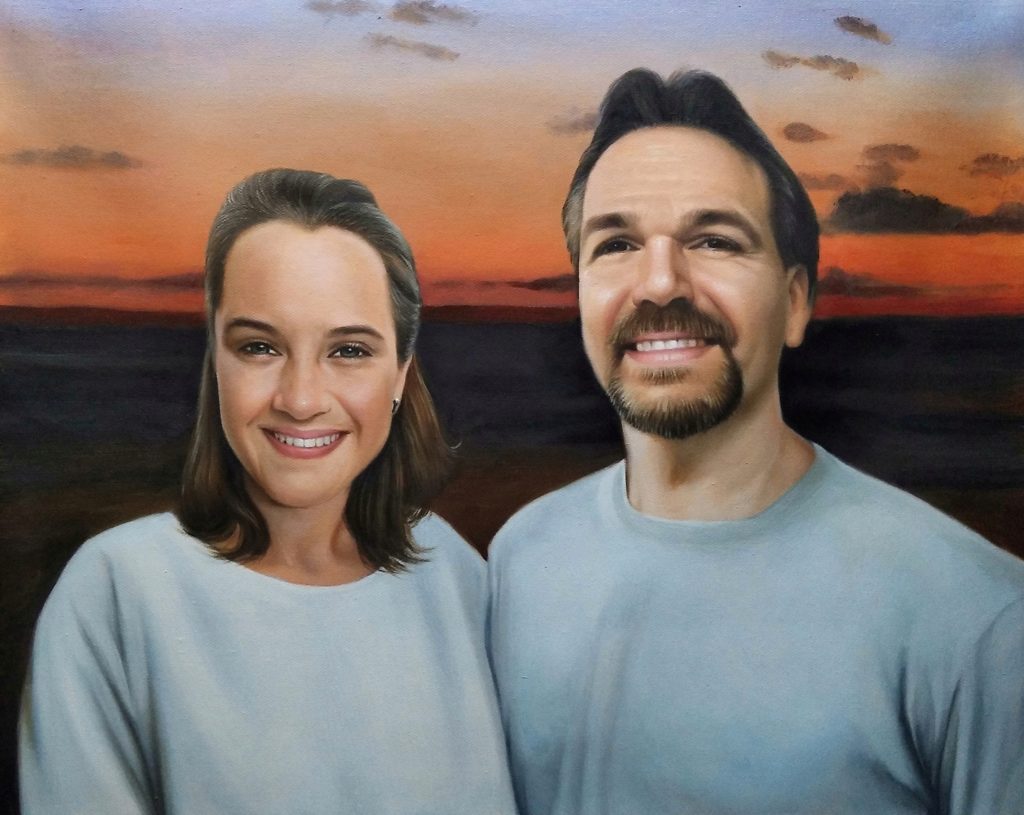
Laura and Shannon Agofsky – Illustration work by artchangesfate

Laura, an activist with the German Coalition Against the Death Penalty, agreed to answer ECPM’s questions to explain the situation and give their point of view.

Condemned and Commuted: The Paradox of Shannon’s Case

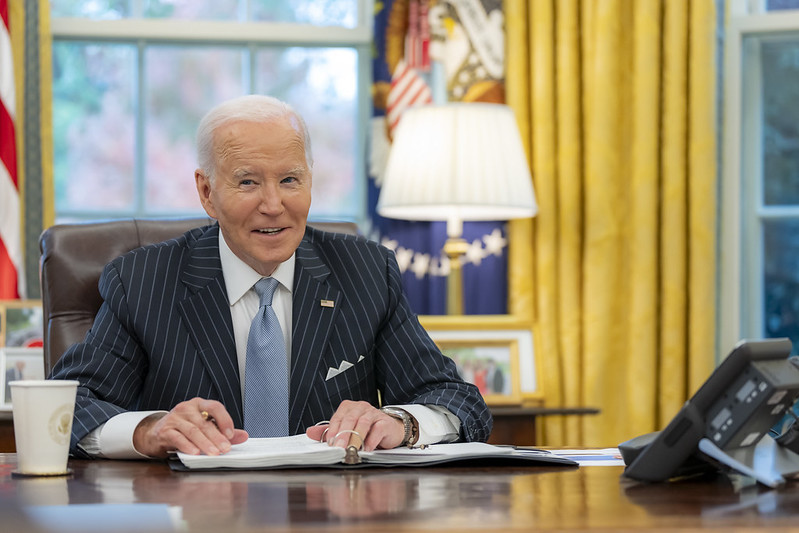
Shannon’s situation is both complex and tragic. Originally convicted of bank robbery and murder—charges he vehemently denies—he was sentenced to death, leaving him with little chance to prove his innocence.Without the financial means to obtain proper legal representation, he resigned himself to spending the rest of his life behind bars. Ironically, only after killing someone in self-defense, Shannon was granted court-appointed lawyers and funding, not only for the death penalty case but also for revisiting his original conviction. However, in a twist that has further complicated his fight for justice, President Biden commuted his death sentence to life imprisonment. This commutation, rather than providing relief, now hampers his ability to reopen his appeals and present crucial evidence in his defense.

In Her Own Words: Laura’s Testimony on Shannon’s Case and the Death Penalty

How did you and your husband react to the news of the commutation?

Despite the efforts of the abolitionist scene and their tireless requests to President Biden, asking him to commute all federal death sentences, neither my husband nor I expected him to actually do anything. Because of his past actions during his political career, which were pro-death penalty, we assumed that he would not change his course now, despite his campaign promises.

So, when we first heard about the commutation, it was no reason to celebrate – on the contrary, it felt like the worst thing that could possibly have happened to us at the time.
On the one hand, being an anti-death penalty activist myself, I had, of course, hoped that Biden would commute the death sentences of the prisoners who requested it. My husband never requested it, though, and he had good reasons not to, as having “only” a life sentence limits his chances of reopening his cases. Therefore, the news on December 23rd hit us pretty hard. He learned about the commutation of his death sentence while watching the news and called me as soon as he could get to a phone that day. When he told me about what had happened and the effects he thought the commutation would have, it felt like our world was falling apart.

Ever since we started a pen-pal friendship in 2012, we had high hopes that he would eventually get a chance to prove his innocence in court. Important new evidence has been discovered, and all he needs is the opportunity to present it. With the American legal system being as it is, it was obvious that it would not be an easy journey but a long and hard battle. However, there was progress regarding his open appeals, which were directly linked to the death sentence he had so far. The commutation of his sentence put his appeals in jeopardy.

So, when we first heard about the commutation, it was no reason to celebrate – on the contrary, it felt like the worst thing that could possibly have happened to us at the time.

Advocacy
January 2025
In an act of justice and mercy, President Biden commuted nearly all federal death row…

What does it mean for him?

Our main concern was that Shannon would lose the funding for his appeals in both the original case that brought him to prison and the Texas case, where he received a death sentence. It is quite paradoxical. When he was originally convicted of bank robbery and murder—which he did not commit—there was no hope that he would ever get a chance to prove his innocence. He had no money to pay lawyers, so he expected to die in prison as an innocent man. Only after he actually killed someone (in self-defence) and received a death sentence for it did he get court-appointed lawyers and funding, not only for the death penalty case but also for the original bank case. After his death sentence was commuted, we feared that he would lose his lawyers and funding, which would put an end to his open appeals.

However, his attempt to refuse the commutation drove home to the people working on his case how important the original case was, and they secured funding. So, even though he lost his fight to refuse the commutation and even though it does take away some of his ability to challenge certain issues in his appeals, he succeeded in one of the most important aspects: ensuring continued support to fight the original case. Therefore, the legal situation he is currently in is not as bad as we initially feared.

Despite the legal implications, the commutation also directly affects his housing situation. Although there are new rumors almost daily about where the 37 prisoners whose death sentences were commuted will be housed, it is very likely that Shannon will be sent to the ADX supermax prison in Florence, Colorado. “We will have to wait and see” has probably become the sentence we have used most often in the past few weeks. There is just so much we don’t know about what the next weeks and months will look like and under what circumstances he will be held. So, we are living day by day, as there is no way to predict what will happen, how often and through which channels we will be able to stay in touch, and whether I will be able to visit him in the prison he is sent to.

So, we are living day by day, as there is no way to predict what will happen, how often and through which channels we will be able to stay in touch, and whether I will be able to visit him in the prison he is sent to.

Will Donald Trump’s arrival in the White House change things for death row inmates in the USA?

There are two angles to this question. First, the way it affects death penalty cases in general. Trump made it clear that he wants to ramp up death penalty prosecutions, and increase the scope of the death penalty, as stated in his executive order form January 20, 2025. It will affect a lot of future cases, and even some current ones. A good example is the Barrett case, out of Oklahoma. Kenneth Eugene Barrett had his case reversed, for resentencing. The Biden administration would not authorize them to seek death again, which put him in the clear.  But at the time Biden did his commutations, Barrett did not technically have a death sentence, and could not be commuted, even though he has been on Federal death row for years. The prosecution knew if they delayed his sentencing, they could get it reauthorized, so that is what they did. Now he is likely to be back on death row soon.

There is no logical reasoning behind it, other than the propaganda purposes of pretending that death row inmates are the most dangerous in the system, and the fact that Trump is angry he did not get to execute anyone. 

As for how it affects the former death row prisoners who are currently still held in Terre Haute, in all the history of federal cases being overturned, there is a specific pattern of what happens. The prisoners were released to regular populations prisons, and go on with their limited lives. There was no reason not to release them into population, as they mostly had zero prison infractions. Death row inmates have statistically less problems and violence than any other subset of prisoners. That was set to happen with most prisoners this time as well, other than those with prison killings. Their paperwork was done, to send them to various places. Then Trump stepped in, and overnight, they were all redesignated for the ADX supermax. It is actually more expensive to house prisoners there, than on death row, and nearly no one meets the stated criteria in the prison policies for sending people to ADX. But it is likely they will still be all sent there, since a president ordered it. There is no logical reasoning behind it, other than the propaganda purposes of pretending that death row inmates are the most dangerous in the system, and the fact that Trump is angry he did not get to execute anyone. 

Beyond the Verdict : A Call for Justice and Abolition

Laura’s story—her personal journey and her fight alongside Shannon—brings to light the deep flaws within the death penalty system. What appears as an act of mercy on the surface has instead created new legal obstacles, making it even harder for an innocent man to prove his case. Their experience reinforces the urgent need for abolition of the death penalty and serves as a powerful reminder that justice must always prioritize fairness and rehabilitation over punishment.
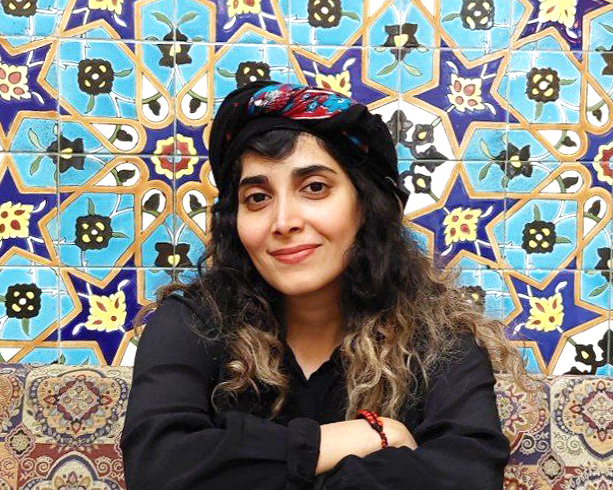
Portrait of Anisha Asadollahi

Anisha Asadollahi is a 35 year old labour activist, independent researcher, writer, and translator. She has translated texts from Sylvia Federici and Nancy Fraser among others. Previously arrested in 2017 and 2019, she was sentenced in May 2023 alongside her husband on charges of collusion and propaganda against the regime. She began serving her sentence in Tehran’s infamous Evin Prison in July 2023, and has regularly engaged in writing and joint activism with other prisoners since then. Her right to receive visits or make phone calls to her family has been largely limited during her incarceration. In June 2024, her sentence was reduced to three years and seven months.

No to execution — an absolute demand in thought, will, and action

In her statement, Anisha Asadollahi writes:

We are fully aware of the necessity of standing firm in defense of the demand for no to execution and its class roots. We consider it our historical duty to wholly defend this progressive right, fully understanding the consequences of this confrontation. We also never forget that socialists have been among the first targets of the state’s execution apparatus.

Asadollahi points out that the demand for #No_to_Execution « has yet to become fully internalized within our society in its entirety, in a way that leaves no room for doubt… Every political force today must first ask itself whether execution is an absolute for them. To what extent are they aware of the legitimacy of this stance? We must question exceptions, Every political force must be held accountable before the masses through questioning. Will tomorrow see the reemergence of these loopholes under a different guise—traitor, terrorist, betrayer, retribution, and so on? Every political force must be asked: If they make exceptions, where do they draw the line ? ».

Anisha Asadollahi was arrested with her husband Keyvan Mohtadi, a member of the Iranian Writers Association, in connection to the first of May 2022, along with two French labour activists Cécile Kohler and Jacques Paris who are also held in detention as hostages. Iranian social activists as well as international institutions have demanded the immediate release of Anisha Asadollahi and two French labour activists in Iran. Her husband Keyvan Mohtadi was released in September 2024.

Find out more on the situation of the death penalty in Iran with our country page and annual reports

Iran
Iran
Retentionist
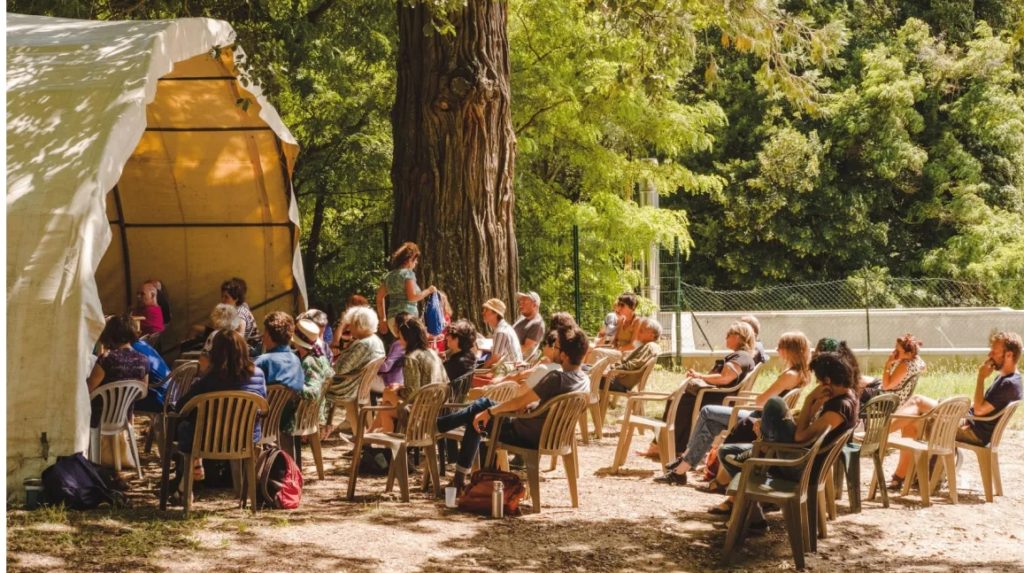
Concertina’s public under the tent – Photo credits : Frédéric Bellay

Our societies judge the person imprisoned, their fault, their deviance, their offence, sometimes their non-conformity to social norms or their political dissidence. They think it is right to set them aside to protect themselves and, why not, to make them suffer in the process, to push them towards the invisible margins of our territories. There is only one step from the margins to exclusion, and sometimes it comes close to barbarism.

Édito 2024, Concertina

“The law of Talion”: ECPM workshop

Co-created by Prison Insider and ECPM, the “Law of Talion” workshop offered an opportunity to discuss the consequences of capital punishment for the families of convicted prisoners. On this occasion, Shole Pakravan shared her testimony. Shole’s daughter was executed in 2017, after seven years of relentless struggle against the regime that had sentenced her to death. Accused of murdering a senior member of the Islamic Guard who tried to rape her, Reyhaneh Jabbari was executed when all appeals had been exhausted.

Under Iran’s Islamic Law of Talion, murder is punishable by death. All those convicted of murder are sentenced to death by the courts. Then, the choice of whether or not to execute the condemned person is in the hands of the murdered person’s family. Capital punishment is not carried out if the victim’s family or relatives agree to pardon the person or receive financial compensation.

Iran
Iran
Retentionist

Shole Pakravan’s portrait

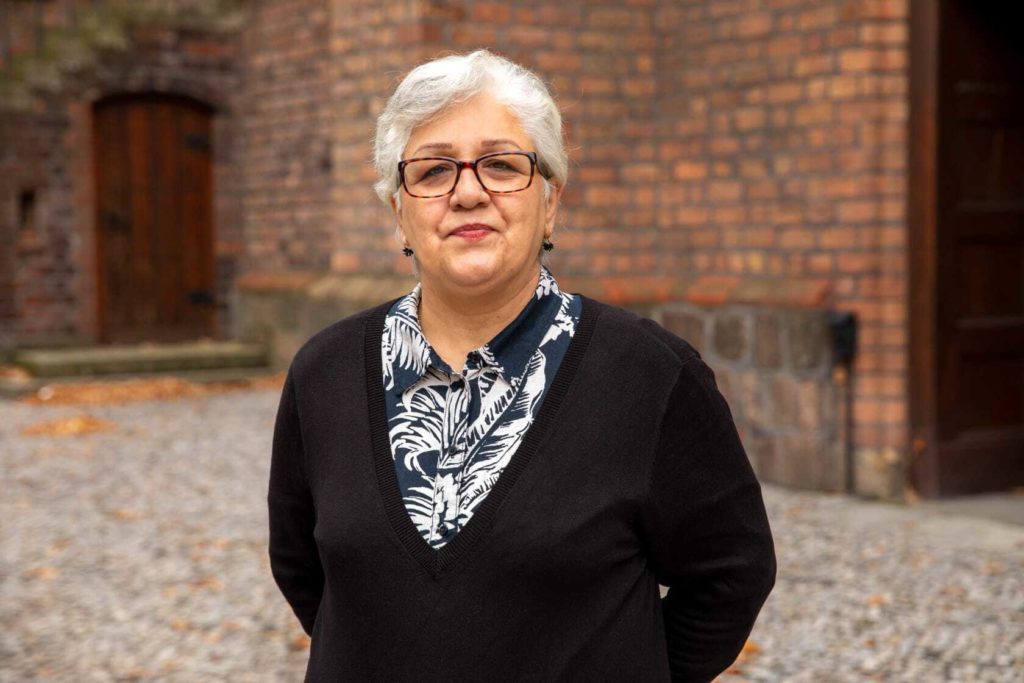
Shole Pakravan – Photo credits : Mélanie Bühnemann

Shole Pakravan is an Iranian human rights activist who now lives in Germany. Nowadays, Shole recounts how her daughter’s strength remains anchored within her, and remembers her determination to concede nothing to the regime: in particular, she refused to allow the family of her attacker to write a letter in which she would have confessed to lying when she denounced the violence she had had to defend herself against. Shole transmits this strength to the young people she meets around the world, encouraging them to join the fight to abolish the death penalty, even with the smallest actions: “small streams make big rivers”, she insists, “just as violence, peace spreads beyond borders”.

You know, my daughter’s suffering is over, but mine and our family’s is still very much alive. We carry it in our flesh. I want people to realize that it’s not just one person who dies in an execution: the family dies with it. Western countries should consider that the death penalty in Iran concerns them too.

Shole Pakravan

The death penalty in Iran

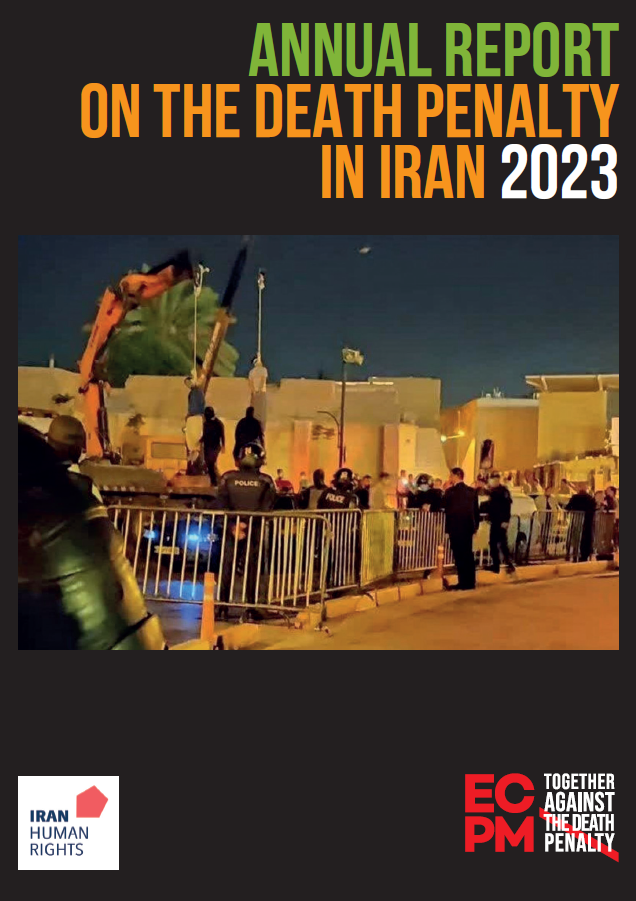
For many years now, the Islamic Republic of Iran has been the country with the highest number of executions per inhabitant. Since the 1979 revolution, the death penalty has been regularly used by the authorities as a tool of political repression. The many convictions since the uprising triggered by the death in custody of Mahsa Amini in September 2022 are terrifying proof of this. Central figures in the Iranian population’s resistance, many women are now being executed for having attempted to resist the aggression to which they are subjected. As part of its work, ECPM publishes an annual report on the practice of the death penalty in Iran, in partnership with the Iranian association Iran Human Rights.

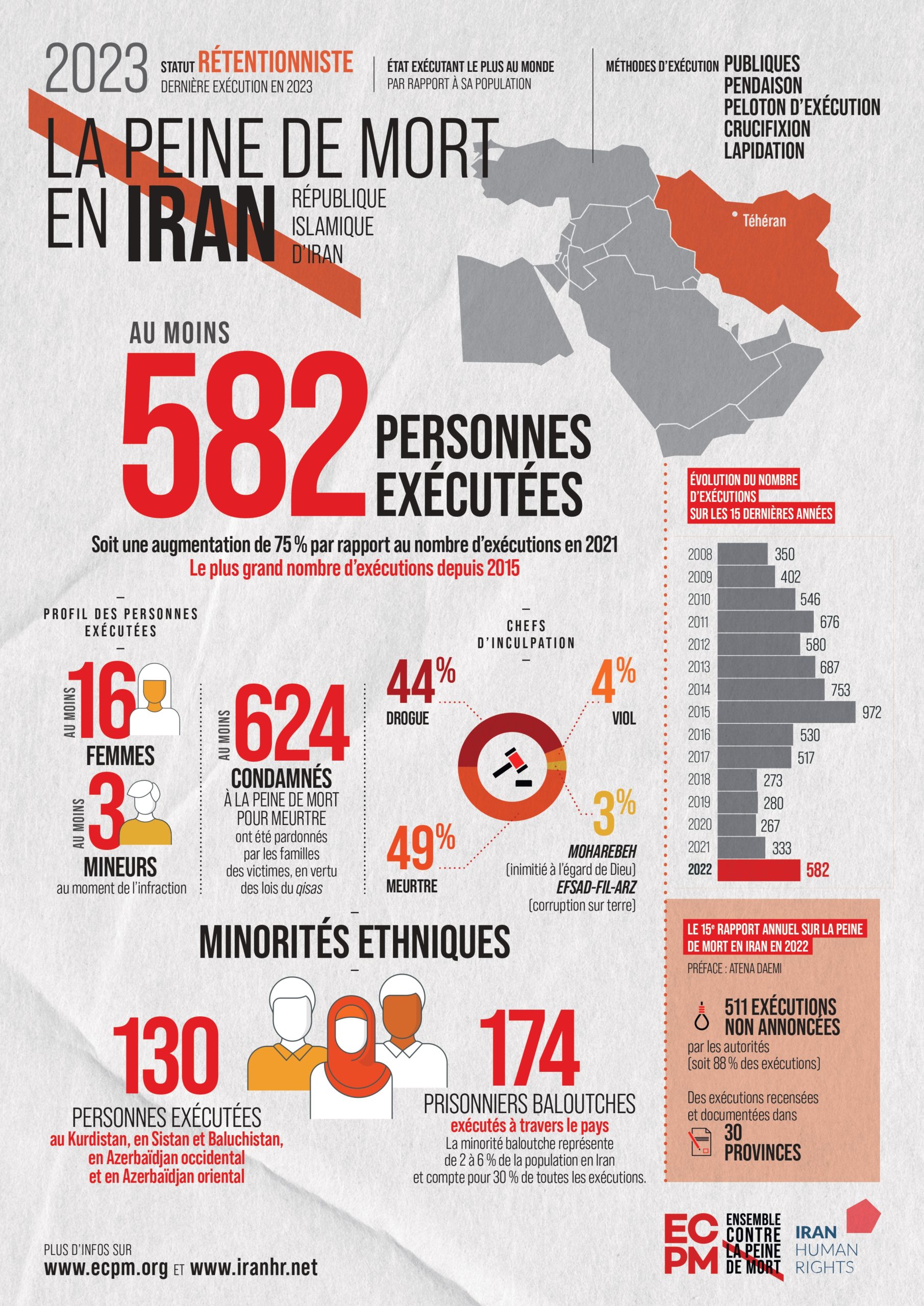
Infographics – the death penalty in Iran (2022)
Logo Iran Human Rights
Iran Human Rights
Iran
Portrait Pepe Julian Onziema

Good morning Pepe, to start with, could you introduce yourself briefly?

My name is Pepe Julian Onziema, and I live in Kampala, Uganda. I work with Sexual Minorities Uganda (SMUG). I am a transgender man and an activist for over two decades, and proudly living in my own country, as horrible as it is.

SMUG actions and being a LGBTQIA+ community member in Uganda

As you know, the law in Uganda mandates the death penalty for the so-called “aggravated homosexuality”. Since the passing of the law, have there been any cases registered under this law? What it is like, today, to be a member of the LGBTQIA+ community in Uganda?

Since our parliament passed the Anti-homosexuality Act in May 2023, also signed by the President, we released a report. It has about 1,053 cases that we have documented from September 2023 to May 2024. Under the law itself, which has the extreme death penalty as a punishment for “aggravated homosexuality”, we have 13 different cases, from all over the country. Our Directorate of Public Prosecution issued a circular, saying that anyone who is charged under the law, has to come to its office before any form of conviction.

We currently have 13 people who are in remand and the sentences haven’t been issued, but they are charged with homosexuality under the current law.

Since our parliament passed the Anti-homosexuality Act in May 2023, also signed by the President, we released a report. It has about 1,053 cases that we have documented from September 2023 to May 2024.

Then, how is the life for a LGBTQIA+ person in Uganda right now? To be precise, the cases that we can trace are 1,053. In those, what is leading is the cases of evictions. This means people who are thrown out of rented housing and people who are thrown out of homes because their families are banishing them for being LGBTQIA+.

Then, usually when a LGBTQIA+ person is arrested – be it a gay man, a transgender woman, a transgender man, or a queer man – , for the policeman to prove that you have committed homosexuality, they carry out first an examination. People are stripped, and their parts are checked by force by the police, to prove that they had what they call “gay sex”. That kind of discrimination is on the rise.

The other ones are arbitrary arrest and blackmail, which are usually intertwined. For instance, when a landlord kicks you out of their house, they call the police. So if you want to recover your rent from your landlord, the police will say: “For us to protect you, to not torture you, to not forcefully examine you, or just for us not to take photos or call the media, give us, let’s say, €500.” Thus, extortion and blackmail happens by the police, but also sometimes by landlords, employers or even partners. Violence and blackmail also occur between intimate partners.

So it is a range of violations, some are in the law, and some are not. But it is an evident fact that some people use the law to blackmail and extort money out of LGBTQIA+ community members.

We know that you have been taken to prison multiple times: what is the impact of being gay and/or transgender when imprisoned in Uganda?

It is horrible. I was arrested and taken to detention six times. The last time that I was arrested was in 2016. At that time, when you went into custody, the policemen told you to remove everything: it meant money, a watch or a ring for instance. Then, you had to take off your shirt, your belt, your shoes, your socks, everything. Also, the place was really dirty. So, when the policeman pushed me into the detention hall, there were other prisoners, and he said: “You deal with this one”. Usually, police also used other prisoners to extort money or else. You know, some serial offenders kept coming to the police station, and they got out when they paid to the police. Hence, they connived and worked together.

I still had my pants and boxers on. But when they pushed me in, one of these serial offenders who was already in started beating me up. He just beat me and then told me: “Go and bathe”. It was a punishment for new people when you got in. So there were soap and water but then they told you: “Why are you using the water and the soap? Did you pay for it?” but at the same time they were telling you that you had to be clean to be there, so it was really difficult. Me, as I identify as a transgender man, I was in the male section, which meant that there was no privacy to take that shower. Two new prisoners were also there and said: “Oh, don’t worry, we are going to shield you”. They helped me with a small piece of clothing they had while saying: “Make it quick”. This is how I managed to take the shower. Then, because I don’t see very well without my glasses, the policeman allowed me to go in with my glasses when I came out of the shower. But then, when I was there, this tall, really huge guy who was the “head of the prisoners”, told me: “Why are you wearing glasses? Do you think you’re special?” and started beating me up until I lost hearing in my left ear. I had to have surgery for that.

We were two transgender men, and then there was a transgender woman. The three of us were really treated so badly, but most especially myself, because I was trying to speak back to say: “Why are you doing this to me?” I had to go for a full medical check-up because they called another prisoner to beat me up. Their explanation for their behaviour was: “These are homosexuals. So we need to treat you the way you need to be treated”.

Before that arrest, myself and another colleague, we had posted a tweet saying Uganda police had arrested us. By the time people in the US and worldwide were waking up because they saw the tweets. They started calling their embassies in Uganda asking: “What is happening to these activists? Whatever police station they are at, can you follow up?” That is what saved us because, at the time when the police officer came to get us out, the other inmates were pulling down my trousers to rape me. The padlock on the door opened, and that’s how it stopped. I still have trauma of that time, and as much as I continue to do my work, I am overcome by fear from time to time.

We also wanted to talk about the perspective of action of your organization to operate in Uganda now that the Uganda’s National Bureau for Non-Governmental Organization banned your organization. What is it like to work in that context right now?

The NGO Bureau, as we call it here, shut our organization down illegally because we were not registered with them. They had no jurisdiction to shut us down. We attempted to register and were denied registration, but out of impunity, they decided to shut down my organization.

Then, how are we working after that? We know and take seriously our right to associate. Our constitution guarantees our right to association even if we are not legally registered. We decided that, if SMUG could not be registered, we had a community of millions of LGBTQIA+ people, and we had to continue serving them. Hence, we decided to create smaller groups of LGBTQIA+ communities across the country, whereby we are documenting violations, and building capacities in advocacy, in organizing and in financial literacy. Also, some organizations registered so we are supporting them in the understanding and implementation of legal parameters to comply.

We decided that, if SMUG could not be registered, we had a community of millions of LGBTQIA+ people, and we had to continue serving them.

My executive director, myself, and our organization are very prominent. We have never hidden ourselves and have been very open, even the government itself consults us. The shutdown did not work out for the government and our community. We needed to find a middle ground. By speaking to our government, we created a sort of agreement that implies that we could continue to work, but without going to our office and having public meetings (it did not include closed-door meetings). Thus, because we are activists, we adopted a “catch me if you can” attitude. When people talk about fugitives, they talk about them in a negative way, but in a country like ours, we adopted a fugitive philosophy to survive. We created so many different safety measures to make sure that our community is meeting and functioning at the same time.

We are in constant dialogue with the government and in fact, about two hours ago today, we were meeting with our members of parliament doing an awareness and sensitisation meeting for them, around the violations that are happening in the community and on the impact of the law that they passed. Most of them were ignorant or confessed that they were bullied and intimidated into supporting the law.

The influence of colonialism: its impact and lines of thought

Your last interview in the US with John Oliver goes back to 2014, and it was the opportunity to speak about the influence of both British and American ideology and colonialism on Uganda’s policies. Since then, according to you, do you think this influence still occurs?

I think that since 2014, the situation has gotten worse. I am out, I am proud, and I live in my own country. I am very clear that I am not going to leave because of the imported homophobia and transphobia into my country. Yes, right now we are living in an environment where there is still colonialism, but it is changing its face. We can see that a new wave of Americans which is coming into the country, is reintroducing and reinforcing this colonialism through anti-homosexuality laws. We have often said that homophobia is imported into our country.

For instance, I belong to a very traditional clan with traditional beliefs, but homosexuality is not banned where I come from. The truth is, transgender people are celebrated as a mythical element within my clan, which helps to guide our traditional values. So when I see neo-colonialists saying that homosexuality is African (first of all, the people who are calling homosexuality African are not Africans), I would like to remind that because of Uganda’s broken system, it is very easy for our leadership to be infiltrated with this ideology.

As I said, we were speaking with our members of parliament today, and most of them were confirming this idea, saying: “When I was growing up, there were people like this. My parents told me about people like this, and we never discriminated them.” That shows you that there was a root, that the British did not want to antagonize their hold on Ugandese or Africans they wanted to colonize. Instead of us as Africans and Ugandese, really questioning our traditional values, we should question what are we really talking about?

Even when talking about religion in the Western sense, Uganda does not fit that value. We just use religion as a cover because the current wave of colonialism is saying: “If you are religious, then you can align yourself with us.” However, in practice, we are not doing that. Even if the law is there, you will find some people in their constituencies and communities safeguarding and trying to protect homosexuals because they know that their tradition protects them. Nevertheless, out there, there are our leaders, who have either been paid money or have connections to states that want them to speak like that.

We have often said that homophobia is imported into our country.

You led the literature club at your school back then. Do you consider literature as a powerful tool for sexual and gender minority advocacy in terms of education and communication? If so, do you think about any Ugandese author who speaks about this subject?

Absolutely. I started the literature club in my school when I was 15 years old, and I feel that it launched my activism. I wrote a small note to one of the national newspapers, and when they published it, I was like: “Oh, okay. You mean people can actually listen to us?”

Literature is very important. I think one of the reasons that we, Uganda, jumped on to anti-gender, anti-LGBTQIA+ movement work is because we do not have proper literature that explains to our own people that this existed a long time ago. When you look at what the anti-LGBTQIA+ people are using, they are using the Bible. The Bible is a form of literature because it is written stuff. Of course, they are choosing what they want to use, but just imagine a world where we wrote our own history. Imagine if our forefathers, foremothers, sisters and brothers, wrote down everything about our clan and history. I feel that maybe homophobia would not be there because we would have something to reference to. We must recount, go back and rewrite that history. It has to be written and vocalized like the interview we are doing today. It will go a long way.

One of the people who has been trying to follow up on that history is a law professor, Sylvia Tamale from the Makeria University. Then the other person is an anthropologist, Dr. Stella Nyanzi, who is currently living in exile in Germany. She wrote extensively about sexual orientation and gender identity, and the importance of literature for us to counter the Western narrative about homosexuality in Africa. Also,  I am trying to work on my autobiography to tell my own story as well and to add to the literature that exists.

International outreach of SMUG and Pride Month

Moving on to the Paris International LGBTQIA+ Prize, of which you were the laureate last year. What does this recognition mean to you? Have initiatives like this one helped amplify your voice, maybe worldwide?

We were privileged to be awarded that price. It came with a €5,000 incentive, which was very important at the time because we had so many cases of evictions, arrests, beatings or corrective rape, and we had no money. Our other partners were sending us funding, but it was very slow, and we had this immediate need for money. When I was in France, I asked my colleagues how many cases we were supporting. It was close to 30 cases with relocation, but also for medical cover and mental health support through psychologists who were able to pay for that.

Then, the political incentive of France was also important. Even though we are Anglophone because of British colonisation, and French speakers are very few, we do have a French embassy in Kampala. It improved our significance and our importance for France affirming that even if the French government does not have a major presence in Kampala or in an Anglophone country, LGBTQIA+ rights are still human rights. That was important to communicate that idea, by recognizing SMUG as a recipient of the award. Also, I sent back a gratitude email to the Paris mayor’s office, seeking that this price has to go a long way, because this is Pride Month and most of the embassies are hosting us at their residencies in recognition. Yes, the funding has worked, but now the political cover has to follow. We requested the French Embassy in Kampala to host at least 10 to 15 community members to make the community feel reassured that France is behind and besides us in our quest for human rights.

Yes, the funding has worked, but now the political cover has to follow.

As you know, June is Pride Month worldwide, but it should remind us that we must work for LGBTQIA+ rights every day. What does the Uganda community needs right now to feel some support from the international community, civil society and the general public?

For us, usually we celebrate in August, but we also take part in June. Our message is really simple: do not let Uganda get off the radar, it still needs your solidarity and love. We need you to continue supporting us in amplifying our voices across all sorts of media.

Because what our country, our courts of law, want you to do is to remain silent. Take it from me, as a person who has suffered violations in my own country for being who I am, that the courts of law are just trying to shut the world down and that violations are still happening. We decided to launch the violations report during Pride Month because we wanted people across the world to continue having Uganda on their minds.

If you have money, please put it where it is needed, we still have so many people who still need support. We created SMUG International so we could receive through it. Also, we would like to spread a message to embassies, for them to facilitate visas for people who need to leave the country. It can be permanently or for a few months. Some people just need to go out and breathe, to then come back with better strategies on how to be safe.

We need you to continue supporting us in amplifying our voices across all sorts of media.

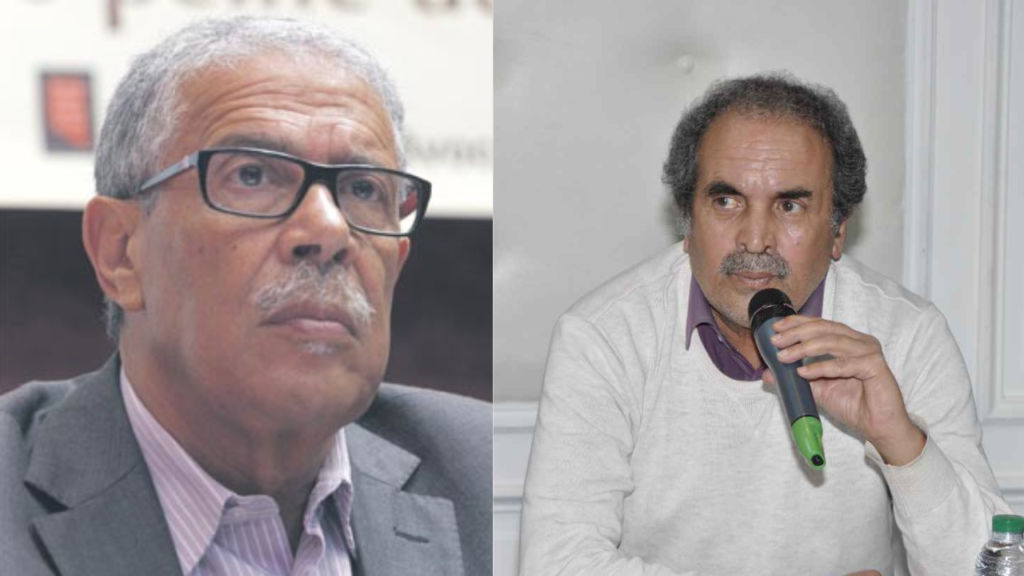
To the left, Mr. Abderrahim Jamai, coordinator of the Moroccan Coalition Against the Death Penalty; to the right, Mr. Abdellah Mouseddad, Secretary-General of the Moroccan Observatory of Prisons (OMP)

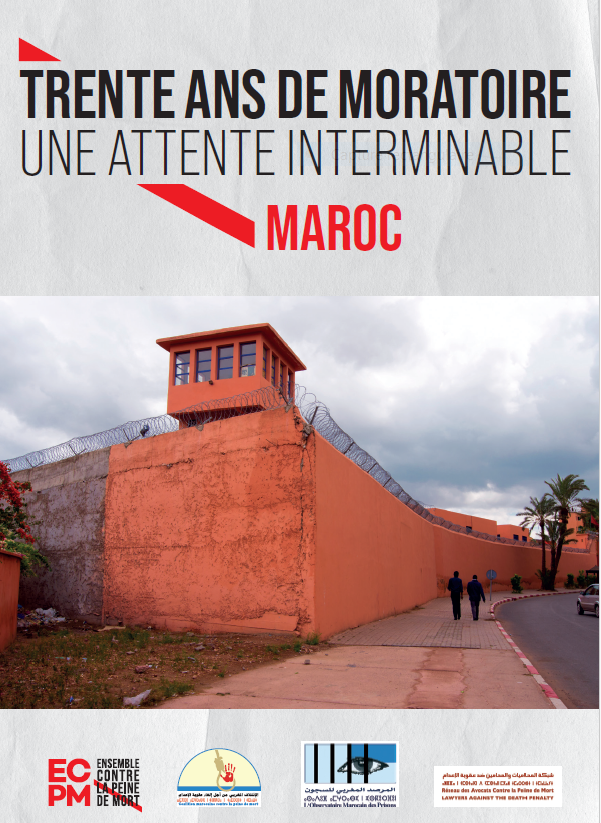
After 30 years of moratorium and a decrease in the number of death sentences, what can we hope for regarding the abolition of capital punishment in Morocco?

Mr. Jamai: Over the past two decades, progress has been made, largely due to political will, as evidenced by the absence of executions since 1993. Societal debate continues among different citizen and political sensitivities, particularly regarding calls for an advanced evolution of penal policy on the philosophy of punishment. Two highly anticipated bills for over a decade, those concerning the penal code and the code of criminal procedure, will shape the country’s future. We fervently hope for a significant decrease in the number of sentences pronounced. It is the hope, will, and determination of NGOs and all abolitionist actors that will prevail in the near future. Indeed, as the universal trend towards abolition confirms, in Morocco, abolitionists are gaining ground…
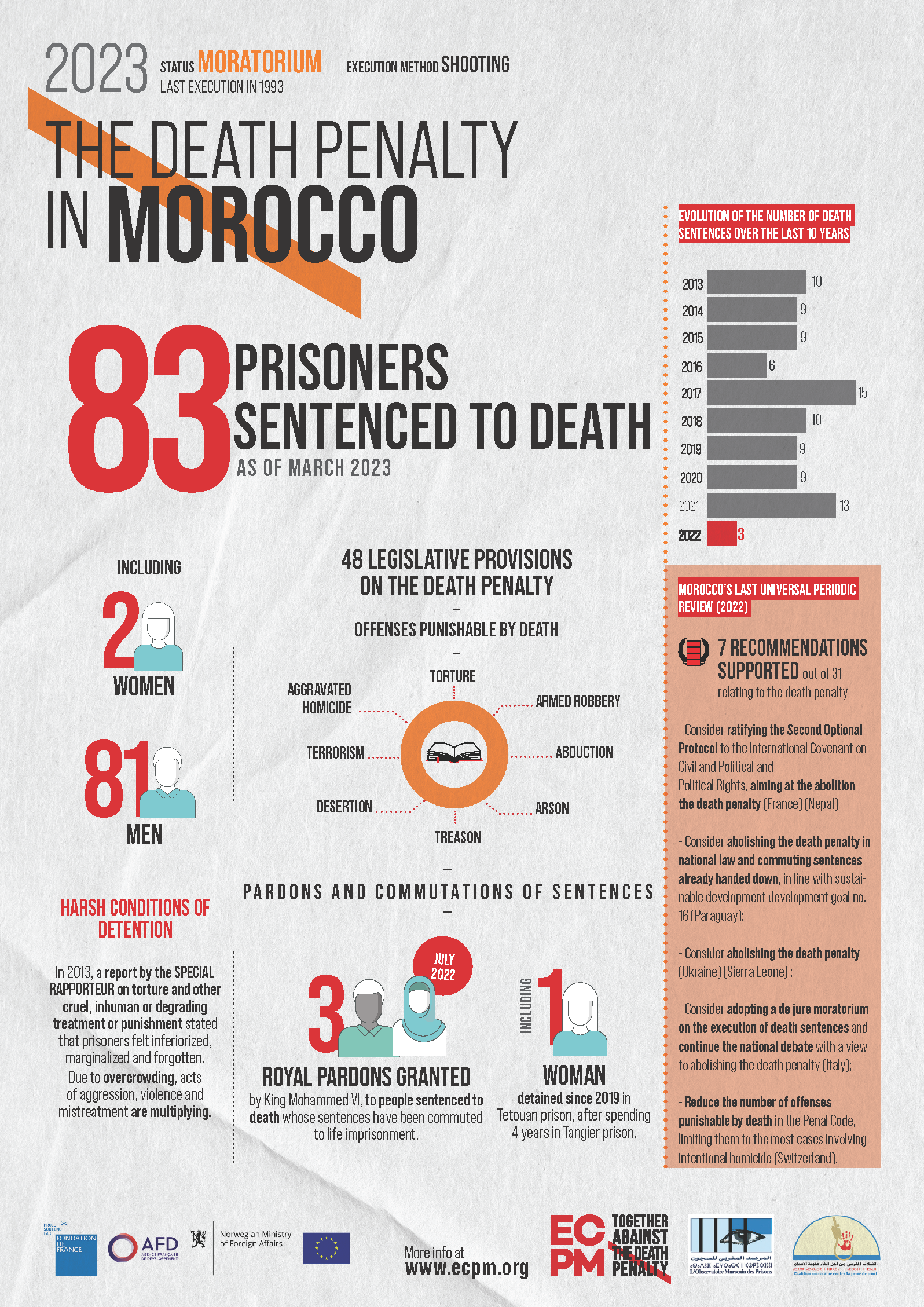
Mr. Mouseddad: We can only rejoice in the progress made in the struggle led by abolitionists within the human rights movement in Morocco. However, the fight for the abolition of the death penalty, both in practice and in law, must continue. This fight aims to shift the balance of power in favor of achieving several crucial objectives: the ratification of the Second Optional Protocol to the International Covenant on Civil and Political Rights, the ratification of the Rome Statute of the International Criminal Court, and the adoption of a penal code devoid of the death penalty.

These advances are essential to consolidate the achievements made and to advance the cause of the abolition of the death penalty in Morocco.

Fact-finding mission
April 2024
Only available in French.

What are the different difficulties faced in the fight to abolish the death penalty in Morocco?

Mr. Jamai: The abolitionists’ struggle takes place in a context influenced by mentalities, political agendas, and the level of crime both nationally and internationally. The effectiveness of awareness and communication actions, and the means used to advocate for abolition by NGOs, political parties, and intellectuals, helps to shift positions.

Unfortunately, we observe within certain political parties a gap between the stated will to abolish the death penalty and concrete actions, particularly in agendas and programs. This situation gives the impression that abolitionists find themselves isolated and powerless, deprived of the support of political and democratic forces active in society.

Mr. Mouseddad: The challenges encountered in the fight for the abolition of the death penalty are of various natures :

  • The political challenge, which is measured by analyzing the manifestations of political will among decision-makers and government institutions. Currently, the limited involvement of political parties in favor of abolition restricts the ability to influence policies and legislation.
  • The sociocultural challenge fueled by the education system, the rate of illiteracy, and the influence of religious currents that may sometimes support the retention of the death penalty.

These complex obstacles require a strategic and multidimensional approach to overcome resistance and progress towards the abolition of the death penalty.

What are the key points/elements of the report in your opinion?

Mr. Jamai: This report comes at a crucial time as Morocco chairs the Human Rights Council in 2024 and the vote on the United Nations General Assembly resolution calling for a universal moratorium on the application of the death penalty is scheduled for December 2024. Furthermore, the debate on the reform of the Code of Criminal Procedure is expected to take place during the next parliamentary session.

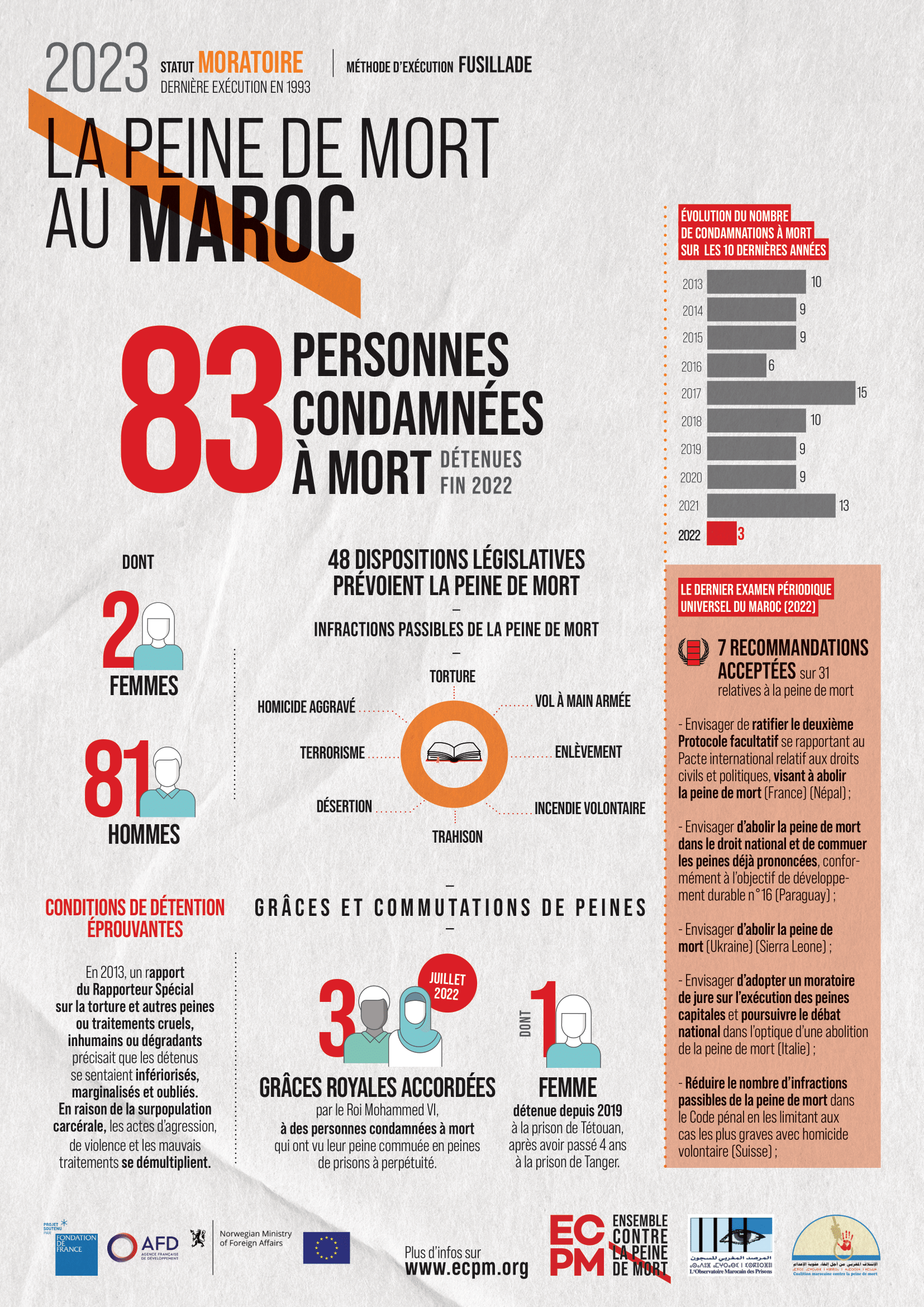
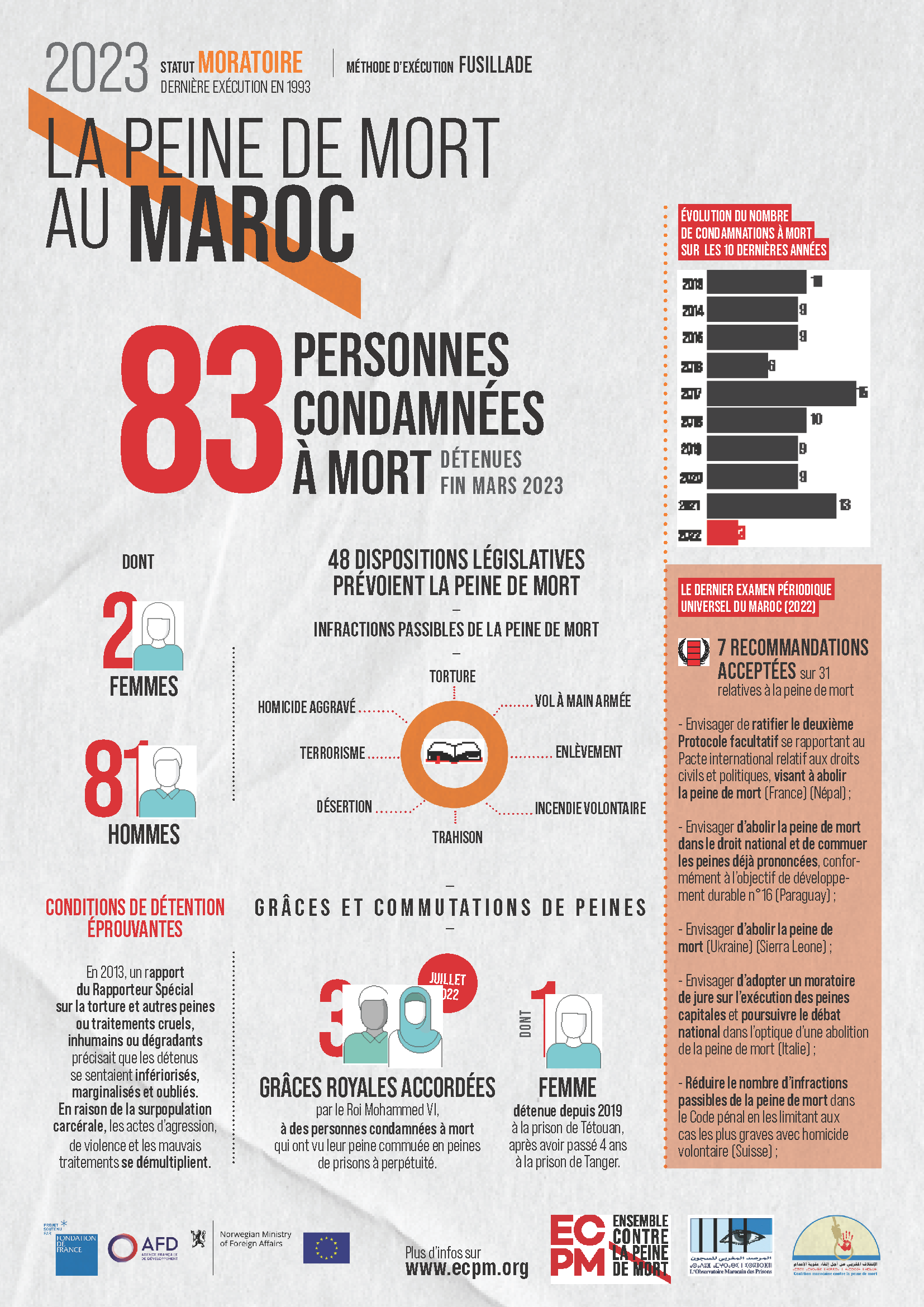
Infographics – the death penalty in Morocco (2023)

Therefore, this report will be an essential tool supporting our advocacy and providing an overview of the favorable context for abolition in Morocco. It addresses the history of the death penalty in Morocco, the legal and judicial status of the penalty, the place of the right to life in penal policy, the behavior of justice actors (judges and lawyers), and their contribution to the fate of individuals threatened by the death penalty. Finally, the report recalls the work done and the proposals of abolitionist actors and NGOs to accompany Morocco towards the abolition of this penalty.

What can you tell us about the current state of detention conditions for death row prisoners in Moroccan prisons?

Mr. Jamai: Visits to death row prisoners continue by the OMP, the Coalition, and its partners. Overall, we observe that the situation is not deteriorating significantly, but it remains challenging, as is often the case in carceral environments. Death row prisoners face significant psychosocial difficulties.

The lack of family ties, insufficient organization of visits by lawyers and NGOs, and the lack of follow-up by specialists throughout incarceration are recurring problems. Additionally, the perpetual threat of execution exerts considerable pressure on individuals sentenced to death, even though its application in our context is almost unthinkable.

It is now time to rethink how death row prisoners are cared for. Should we consider creating specific open centers for them, or on the contrary integrate them with other prisoners so that they feel more part of society and remove the sense of dehumanization that leads them to consider themselves as dangerous and excluded individuals? Collective reflection involving all relevant stakeholders on these proposals is necessary to find appropriate responses to this complex situation.

Mr. Mouseddad: I would add that the current state of incarceration conditions for death row prisoners presents both similarities with the overall prison population and distinctive characteristics. Like all prisoners, death row prisoners face common challenges such as prison overcrowding and difficult living conditions. Detention conditions vary less according to the sentence than according to a new classification of prisoners, which is not transparent and is not enshrined in regulations. They are classified into several categories according to their degree of dangerousness, which would be linked to the nature of their crime and their behavior. This has implications for the detention conditions of individuals considered particularly dangerous, including those sentenced for acts of terrorism: they have limited access to rights, such as outdoor activities and rehabilitation activities; their housing conditions are more challenging, and increased isolation is imposed on them (no contact with other prisoners, restricted visiting modalities). Applying this classification to prisoners on death row, regardless of the length of their sentence, appears excessive, increasing feelings of isolation and psychological vulnerabilities that this group of prisoners particularly faces.

Press release
April 2024
The actors of the Moroccan abolitionist movement are calling on the Moroccan state to actively…
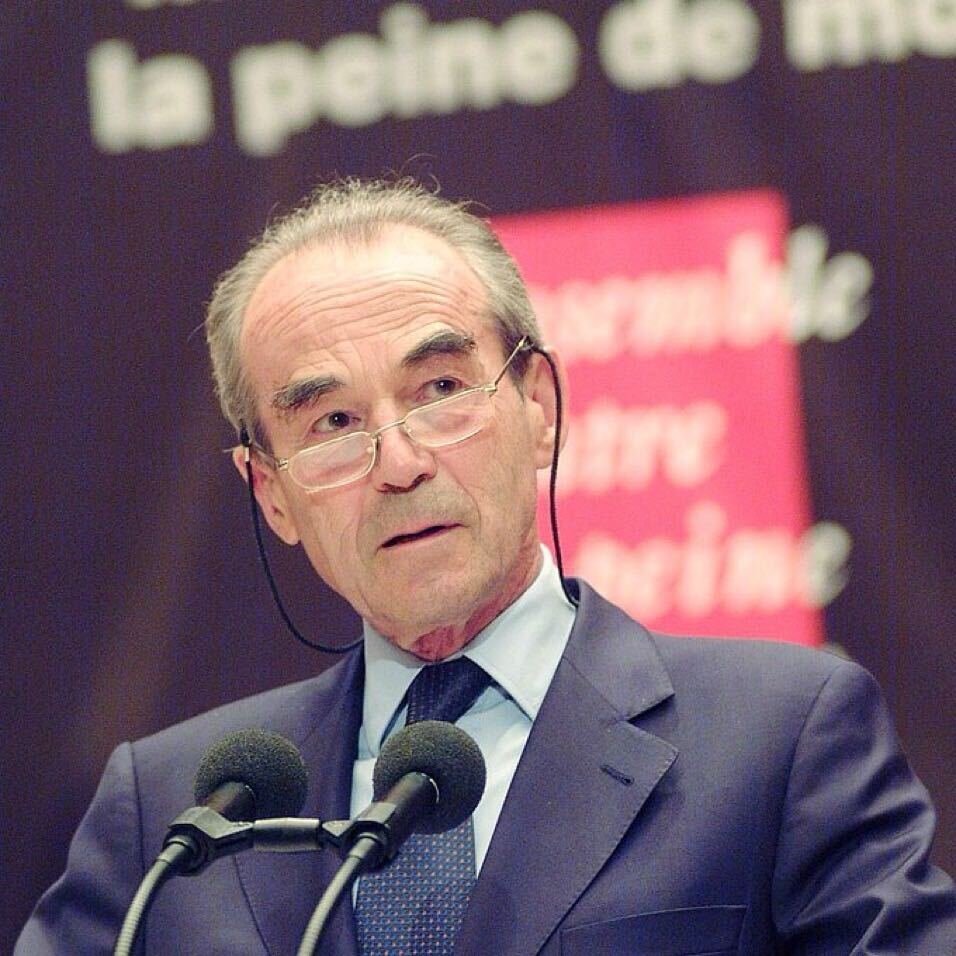
Robert Badinter at the 1st World Congress Against the Death Penalty. Strasbourg, 2001

“I am connected to ECPM through two avenues. The first is historical, as I am one of the founders of the association. I had the opportunity to establish a structure and to witness its evolution without deviating from its original theme. The second dates back to my youth. At nineteen, I did two important things: I obtained my driver’s license and voted socialist! I am clearly a child of 1981, of the Mitterand era. And listening to Robert Badinter defend the abolition of the death penalty left a long-lasting impression on me; it was politically formative.

My most memorable moment of this remarkable journey: witnessing Robert Badinter, during the first World Congress against the Death Penalty in Strasbourg, deliver a speech twenty years after his address at the National Assembly. I recall his presence at the podium, his eloquence, and the silence in the hall as he commanded everyone’s attention… It was a powerful experience!

Robert Badinter’s presence at this Congress was firstly a recognition of our legitimacy, a sort of passing of the abolitionist struggle to our association. It also showed that the fight was still relevant, that it was not over. Symbolically, he embodies the face of this struggle in France and elsewhere in the world.”

Olivier Dechaud

Olivier Dechaud, ECPM Co-founder

In 2000, a modest publishing house released a book titled “Open Letter to Americans for the Abolition of the Death Penalty.” Written by Michel Taube, designed by Olivier Déchaud, and propelled by Jean-François Daniel, it was this book and these three names that gave rise to Ensemble contre la peine de mort (ECPM), or Together Against the Death Penalty.

Twenty-four years later, the three volunteers from the beginning and the actions of the association have gained international significance.

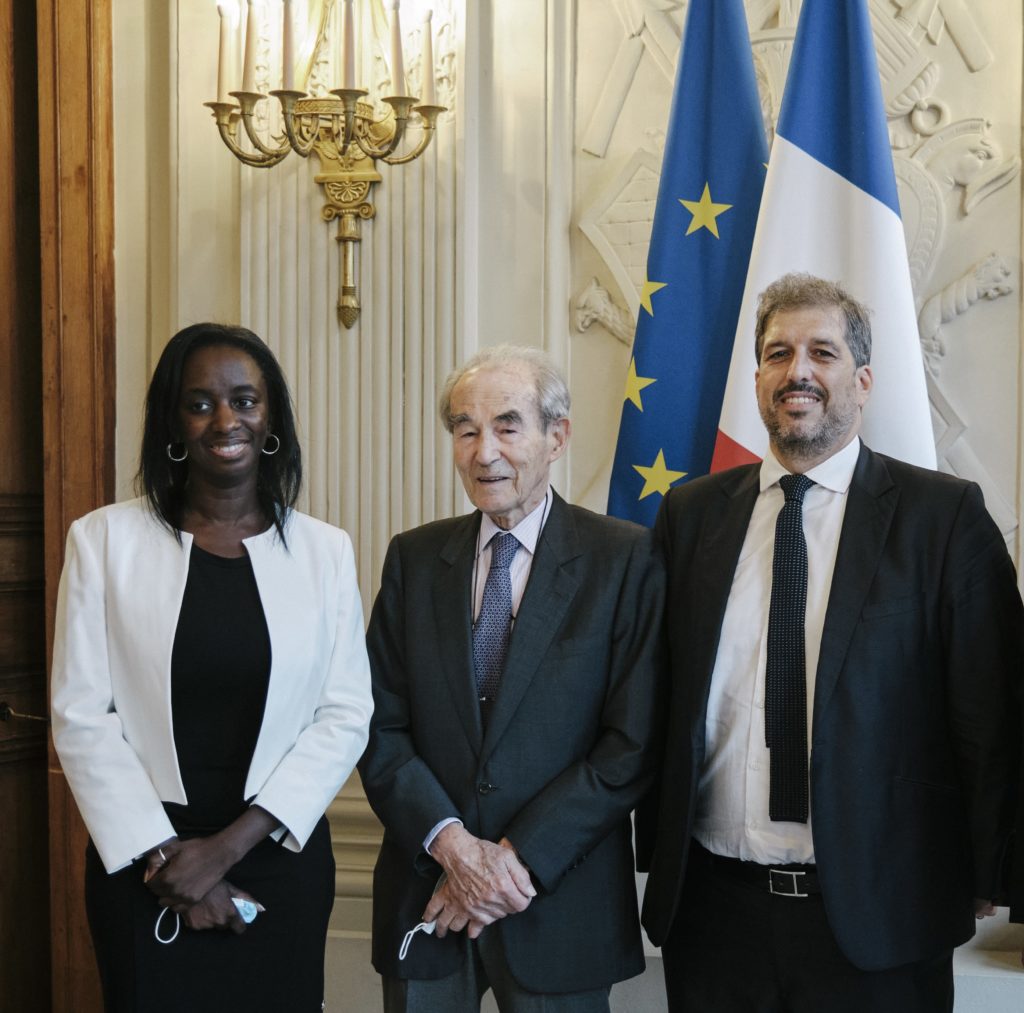
Aminata Niakaté, Robert Badinter, Raphaël Chenuil-Hazan during the celebration of the 40th anniversary of the abolition of the death penalty in France at the National Assembly, 2021 – Photo Ⓒ Christophe Meireis

With the passing of Robert Badinter, the heart of the entire abolitionist community stops.

Robert Badinter, Honorary President of Together Against the Death Penalty, whom I had the honor of meeting, was the tireless advocate for the universal abolition of the death penalty. He was always by ECPM’s side, present at all our congresses, and supporting the actions of our association in one way or another. Beyond our borders, he was also a source of inspiration for the entire global abolitionist community. It is now orphaned of this mentor.

His humanism and determination made him the best ambassador for this cause. We owe him the abolition of the death penalty in France, which he, as the Minister of Justice, managed to secure with a memorable speech that still resonates powerfully in the National Assembly, even when public opinion was against it.

Forty years later, he had not lost any of the eloquence and energy that characterized him. We were all deeply moved by his masterful speech delivered at the Pantheon.

As a lawyer and a brilliant orator, he also fought this battle in courtrooms with a resounding voice. He always saw the dignity of a person regardless of their history, weaknesses, or flaws. He never resigned himself to accept “the sound of the blade cutting a living man in two.”

An untiring defender of public rights and freedoms, we also owe to him the decriminalization of homosexuality. Among all battles, he held secularism and the fight against anti-Semitism close to his heart.

We have lost an immense man.

It is with great humility that ECPM pays tribute to him.

Aminata Niakaté President of ECPM

Présidente d’ECPM

About Edward Mutebi

Edward Mutebi is a Ugandan activist, founder of Let’s Walk Uganda and co-founder of The World is Watching International. He currently resides in Germany and is a member of Queer Amnesty in Berlin. While still in Uganda, he mobilised for the LGBTQIA+ community in many ways, starting with opening an organization in 2015, Let’s Walk Uganda; the first ever openly declared organization to create a safe shelter for LGBTQIA+ people in Uganda and help community members, especially the homeless, by giving them skills to support themselves and providing legal support in partnership with medical and other organizations to reach out to the queer community.

Can you explain the situation of LGBTQIA+ people’s rights in Uganda just before the new anti-homosexuality bill passed by the parliament?

Before the bill, the situation has never been any better because we saw something of the sort before. It’s not the first time that the government of Uganda introduces such draconian and very violative law to the community. The government had already introduced the Anti-homosexuality Bill of 2009. The law was discussed in parliament, until it was passed in 2013. Then it took effect after being signed by the President around January, I think, in 2014.

The law was in operation for some time before it was annulled. The Constitutional Court cancelled it on some technical grounds and since 2014 the persecution has been there. Different kinds of persecution have occurred but in silence. For example, there was an attack on a very common bar ̎ The Ram Bar ̎, a meeting point for LGBTQIA+ people in Uganda downtown underground. The government managed to find it and attacked that place in 2019. They arrested a massive number of people, up to hundreds, and they did whatever they did to them while in jail. Some of them actually went to prison while others were able to be released. In December 2019, my organisation, Let’s Walk Uganda was attacked by the police. They just stormed into our offices and shelters and then they arrested 16 people, including the staff of the organisation and the shelter occupants and then they took them and they tortured them under custody. They subjected them to examination and made numerous violations on them. After a certain time they released them.

Then, in the next year another organisation was attacked and then another year another organisation was attacked in a similar manner. We have also unexplained deaths since 2014 up to date, of LGBTQIA+ people dying in a very mysterious way, people found beaten in their houses to death and the government has never submitted a report to explain these deaths.

So the prosecution had already existed, but of course silently. This law, the introduction of the anti-homosexuality bill of 2023, only fuelled what was already there. So it fuelled the prosecution and allowed the public and the world to see what happened.

To what extent is this law in violation of the constitution in Uganda?

Many rights are violated under this law, freedom of speech, freedom of expression and freedom of association. Some of them may be attacked indirectly, some are attacked directly. One of the very openly violated rights is the right to consent to sex. The government, in this bill, is saying that there will be nothing like the concept of consent as a defence under this law as long as you are 18, and above. If you are caught having a same-sex relation even non-consensual, you may be prosecuted.

Another right that is being violated is the right to housing. Under the new law or bill, anyone who gives a house, a shelter, or rents space to an LGBTQIA+ person, will be subject to prosecution. For anyone who understands what I mean, reading behind the lines, they are trying to attack the housing rights of homosexuals due to the fact that homosexuals in my country do not have bungalows to stay in, they are supposed to rent places to stay.  So, as soon as you start prosecuting a person who is supposed to give me a house, it just means that you are depriving me of all my housing rights. There is also a clause about providing medical care to anyone who belongs to our community, anyone who provides us services is liable to prosecution. This means that people are afraid to go to the doctor in this sense, because they can no longer go to the doctor and tell him or her that they are homosexual or whatever, because they fear prosecution. So, we see that access to medical care is totally compromised and that can lead to an increase in HIV and other diseases.

So there are quite a number of rights that are being violated in this bill but I would also like to point out that the right to life is also being violated. The current bill states that anyone caught in the act of aggravated homosexuality is liable to the death penalty. A genocide is going to happen in my country because some of the clergy and some of the religious leaders have openly spoken out in broad daylight to call for death, to call for beheading homosexuals! 

How can we support the Ugandan LGBTQ community as French people, as people from a foreign country or as members of the international community? What would be the means to help, support and raise awareness?

Raising awareness is the first thing to do. The damage is already very significant, so we don’t know what will happen if the law is signed. We are very worried. The international community can only help us to defend the rights, to defend the Ugandan people who are cornered and threatened with extinction.

We call on the international community to uphold international laws that also call for the responsibility to protect (R2P). And if it is enacted, what do I appeal to? I call on all countries, Western countries, to impose all possible sanctions on the country, on the government of Uganda, until they feel the pinch, until they feel the pain of not being able to support this law.

I also call on Western governments to refuse to issue visas to the officials who pushed this law through parliament.

Support the Ugandan people in this way. This is the only kind of pressure we can put on Ugandan government because they learn and listen through pressure. 

The law also covers minors under 18 years old who will be arrested if they commit a homosexual act, and they will be imprisoned for three years. Imagine being a 16, 14, or 11 years old child and having three years of your life stolen from you just because of your gender or sexual orientation. That’s how bad it is. That’s why I’m also calling. I call on children’s organizations, international organizations. They should stand up because this does not only affect the elderly, but also young children.

What is the opinion of the general public as a whole on LGBTQIA+ people?

First of all, it may be quite challenging in this sense because we’re having a lot of information going out about LGBTQIA+ people. The media, the homophobic pastors say that gay people are pedophiles, gay people are rapists, gay people, recruit young children into homosexuality. That’s the narrative going out to the community. But there is nothing like a counter narrative from the side of the LGBTQIA+ people. So, we need to develop counter narrative strategies that can clear the negative misinformation and propaganda spread to the community, then after we can seek the public opinion on the LGBTQIA+ community because it should be noted that LGBTQIA+ people are family, brothers, sisters, sons and daughters of the same community that we seek an opinion from.

Regarding other countries in Africa, do you think Uganda is taking a step back? Or is it a tendency that the rights are generally taking a step back or what do you think about it?

Actually, according to the global statistics, this law is the worst law criminalising people having sex with the same sex. It’s very brutal, it’s calling for death sentence, it’s calling for life imprisonment, it’s calling for imprisoning minors, it’s calling for so many things criminalising, even service providers, essential service providers like NGOs and it’s very broad and very brutal, very unfair, very unjust, very unfriendly, very unconstitutional, very internationally wrong. That’s the law. Therefore, the Uganda I know started taking steps back in terms of human rights not today, not yesterday, but years back, since 2009 when they first introduced this law. But again, we are having so many evils in the country. We are having people disappearing. We are having people being killed. People have been in prison on political grounds for years. We are having poverty rocking the entire country. We are having high cost of fuel, high cost of living and the highest corruption degree. These are things we’re supposed to be discussing in parliament. But the government and its parliament, decided to start discussing bedroom matters. My culture is very reserved when it comes to sex. Of course, if they really respect the African culture, they should not even get up and start shouting those vulgar words as they do in the parliament, when they say they are so cultured.

Early this year, the government of Uganda published a list of organisations which it claimed that those organisations were recruiting, promoting, and spreading homosexuality in Uganda. Let’s walk Uganda was among those organisations that were falsely accused by government, the parliamentary debates are watched by so many people including children and people who had no idea about homosexuality but now they know since our parliament gave the matter a lot of attention and used all terms of words that crossed their minds. The media attention given all through the tabling of the bill till now is promotion enough and promotion done by government itself.

I wish to conclude by challenging the religious leaders in Uganda, these “Men of God” came up strongly to support the bill as some of them went ahead calling for beheading LGBTQIA+ people, that’s on record by one Muslim leader. I challenge the religious leaders to use the same energy they used to condemn, child rights violations, corruptions, kidnaps by government, the worrying health care, poverty, torture among the countless evils that you keep quiet about yet you rush to condemn LOVE.

I also appeal to the international community to support community based root organisations that are standing in the frontline to provide all possible support and services to the LGBTQIA+ community in these very worrying situations.


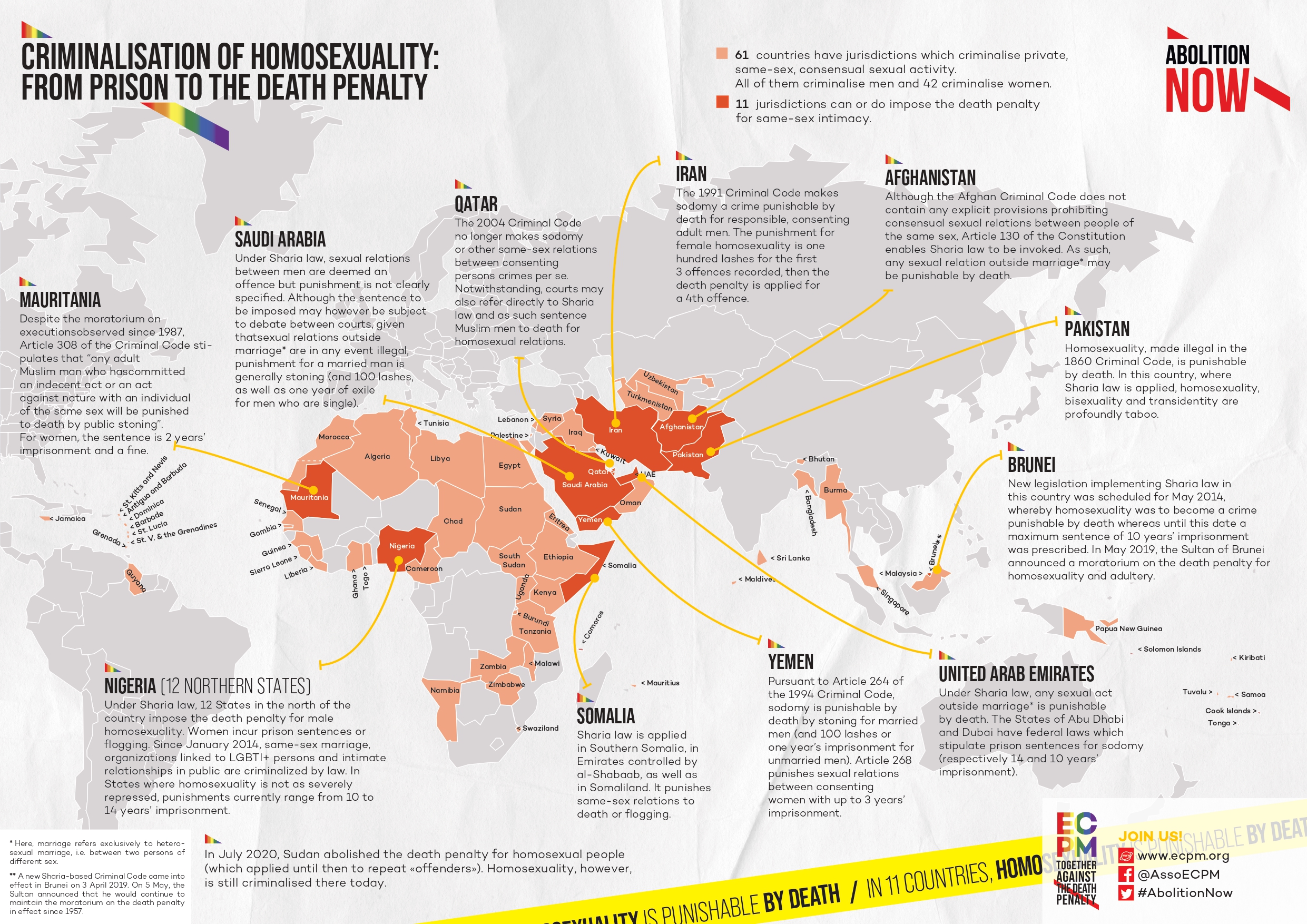
Criminalisation of homosexuality: from prison to the death penalty (2022)

With the campaign “Love is not a crime”, ECPM denounces sexual discrimination and urges countries that sentence people to death on the grounds of sexual orientation to decriminalise it. ECPM also denounces countries with openly homophobic legislation. Asserting and living one’s sexual orientation freely is not a crime and should have no place in a penal code. However, in Africa, the Middle East and Asia, legislation continues to penalise homosexuality.

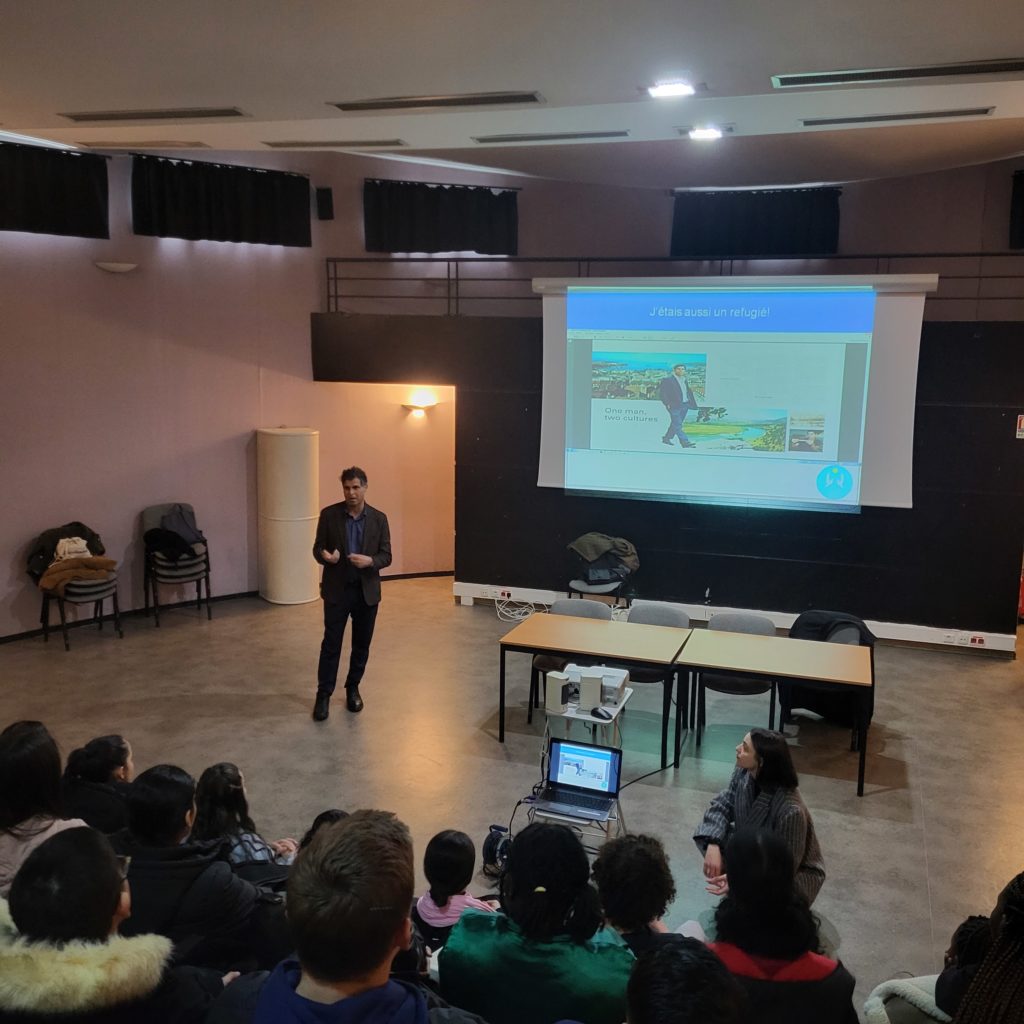
Taïmoor Aliassi témoigne devant une classe de quatrièmes
Taïmoor Aliassi testifies in front of a class of eighth graders

Context

Based on the Sharia law, the iranian penal sysytem is the one that ranks first in the world in terms of executions per capita.In 2022, over 500 death row inmates were executed in violation of international agreements ratified by Iran. Discriminatory charges related to the origin of the accused, drug trafficking or alcohol consumption do not fall into the category of the most serious crimes for which a death sentence could actually be imposed.

Advocacy
February 2023
Since the beginning of the uprising, triggered by the death in custody of Mahsa Amini…

Educating youth on civil rights: an absolute necessity

“Why does it take two women to make a man in Iran?” or the bitter truth of the Islamic code, which an eighth grader questioned during the school. A message that needs to be contextualized and deconstructed through education on social issues. Educating for better prevention, is the mission of Solène Paloma, in charge of the project « Educating for the abolition of the death penalty » at ECPM.

Solène Paloma, Project Manager for Education on the abolition of the death penalty

Nearly 500 young people received poignant and enlightening testimonials from two witnesses of this cruel and inhuman punishment in Iran, Shole Pakravan and Taimoor Aliassi; two activists against the death penalty, with very different life stories.

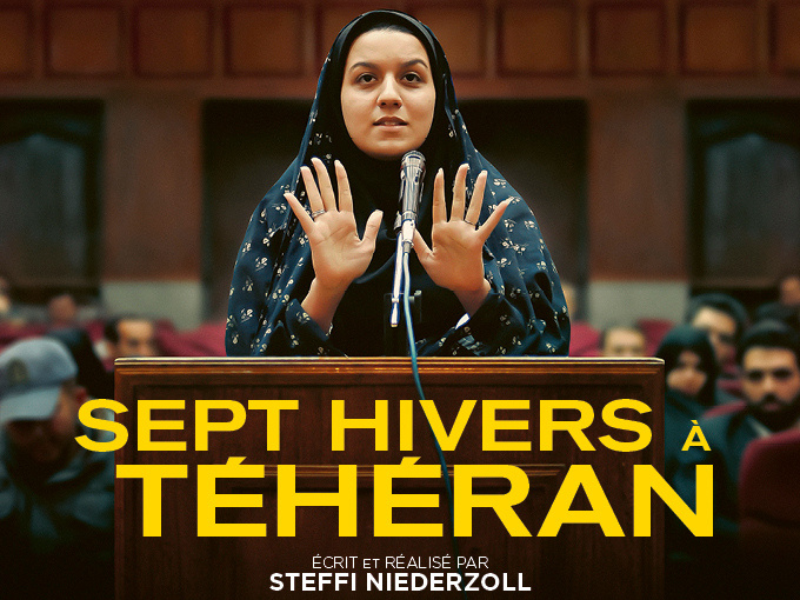
Some of them discovered in preview the documentary Sevent winters in Tehran by Steffi Niederzoll. This feature film tells the story of Reyhaneh Jabarri, sentenced to death at the age of 19, then executed for the murder of the man who was about to rape her. After becoming a symbol of the struggle for women’s rights in Iran, Reyhaneh’s fight is now carried by her mother, Shole Pakravan.

And it was with her that the young spectators had the chance to talk after the screening. Truly touched by Reyhaneh’s sad story, shocked by the injustice she has suffered and admiring the strength and courage of Shole, her mother, the students left the room speechless after an emotionally charged discussion. Some of them shyly approached Shole to hug her and thank her for this life lesson.

Testimony
March 2023
As part of there work in Iran and a special series of school interventions concerning…

The ECPM teams then met with these young people in class to discuss their feelings and their understanding of the situation that Reyhaneh had faced. This exchange was an opportunity to talk more broadly about the application of the death penalty in the world today.

The other students met Taimoor Aliassi. Born into a Kurdish family in Iran, Taimoor left Iran after the 1979 revolution.  Now a Swiss citizen, he founded the Association for Human Rights in Kurdistan of Iran-Geneva (KMM-G) in 2006 to promote democracy, respect for human rights and social development in Kurdistan of Iran and beyond. Taimoor exposed to the youth the reality of a repressive Iran where human rights and freedoms are violated; a country where the death penalty is used as a tool of political repression to contain popular uprisings and rule by fear.

The reactions were numerous for this young generation that is ultra-connected to the world. Ultimately, addressing the current situation in Iran through the prism of the death penalty has helped to raise awareness about many related topics. The students realized that some crimes punishable by death in Iran are no different than fundamental civil rights in France, such as the right to protest or consume alcohol. The difference in treatment between women and men also caught their attention: in Iran, a woman’s value is only half that of a man.

This thematic cycle fits perfectly into many areas covered by teachers, particularly in moral and civic education (EMC), as it raises reflections on freedom of expression, discrimination, inequality, etc.

The representations and preconceived ideas about the death penalty, which often focus on the worst blood crimes committed in the few democracies that practice it, are deconstructed and give way to informed and realistic debates.

In my opinion, ECPM has a genuine expertise to bring to young people in their understanding of current events and their vision of the world. Making them aware of capital punishment when it threatens 60% of the world’s population contributes to their questioning of global citizenship and the values of a world they wish to build.

+ 400
students sensitized on the topic of the death penalty
2
Two witnesses invited to school interventions

Witness: Taimoor Aliassi, Representative to the United Nations of the Association for Human Rights in Kurdistan of Iran in Geneva (KMMK-G), and Vice President of Impact Iran

Is this the first time you have addressed such a young audience?

In France and on the topic of the death penalty, yes. It’s really interesting for me to confront the reality, the perception of the death penalty by young people and their knowledge of the subject. I think it is very important to arouse their curiosity at this age to help them form their opinion.

What struck you during these interventions?

I thought that at that age they would not be interested in discussing it, that it wouldn’t affect them… But as soon as we mentioned concepts such as the application of the death penalty for young women and girls, I felt a form of empathy on their part and it really touched me; even though this issue is very far from their reality here in Paris. This sense of empathy really moved me.

In your opinion, why is it important to testify to the younger generation?

To counterbalance the often violent speeches that can be seen on television or in the media. The death penalty is a subject that is no longer discussed in Europe, even though some states, such as Hungary, have expressed their desire to reintroduce the death penalty. Testifying is essential because the more the youth are aware and informed, the better we deal with the problems of violence in society. We must also not ignore the influence of public opinion in France towards countries that apply the death penalty.

Why did you decide to stand with the iranian people?

Because I myself come from Iranian Kurdistan. Iran is one of the most executing countries in the world, in proportion to its population. The death penalty is particularly targeted at ethnic and religious minorities and Iran is also one of the few countries that execute children. The number of executions is again increasing year after year. I am touched because my family and friends are in Iran and I myself know people who are in prison.

At first, I was not working specifically on the death penalty, I was working in general on human rights but since I knew ECPM, I became a little more aware of the issue of the death penalty. I started to open up and get involved in this field and started interviewing people on death row who were awaiting execution. It has become, despite myself, one of the causes for which I work today.

Once you obtained refugee status in Switzerland, can you tell us the story of your involvement in international advocacy?

At the age of 13/14 I had already survived one revolution and three wars. So I grew up in a context of revolution, of struggle… Several members of my family were opposed to the Islamic system in Iran and committed against the regime. At the age of 14, I wanted to change the world, I was an activist, anti-system, very revolted/rebellious against the system of our society, whether it was religious, patriarchal or other. So I was very committed from a very young age.

How did you manage to turn this anger into a productive fight?

I was 17 years old when a political party came to recruit young people to go fight against the Islamic clergy in Iran. There was another possibility which was to undergo teacher training. I had a brother and cousins who signed up to go and fight, but I chose the second path, more peaceful than the one of violence, which allowed me to teach them why they took up arms. From a very young age, I decided that the best way was to write, educate, raise awareness, reflect, inform and advocate.

Given your long-term partnership, what is your relationship with ECPM?

We are partners since 2010. I often represent ECPM at the UN in Geneva and in many meetings organized by the UN, the European Parliament or other. During conferences organized by the EU, Switzerland or a third party, there is always someone from ECPM speaking about the death penalty. I am invited to speak at ECPM activities at every conference, which I consider a privilege. It allows me to make new acquaintances and to have new networks. This collaboration is very important to us, as ECPM has a relationship with the world and we run a small NGO in Geneva. It is a window on the world.

Is there a final message that you would like to convey?

I’m glad to see that ECPM is focusing on educating young people, because youth is the future. It is a great thing to invest in youth.

Portrait de Taimoor aliassi
About Taïmoor Aliassi

Taïmoor Aliassi is a Swiss citizen of Kurdish origin from Iran, a country he left after the 1979 revolution. He holds a Master of Advanced Studies in Humanitarian Action with a specialization in International Law from the Graduate Institute of Geneva (IHEID). He is the co-founder of KMMK-G, an association that promotes democracy, respect for human rights and social development in Kurdistan of Iran and beyond (member of Impact Iran).

Taïmoor Aliassi is driven by the will to fight against all forms of discrimination, especially against people from ethnic and religious minorities in the region, to advocate against the death penalty and to promote the rights of women and children.

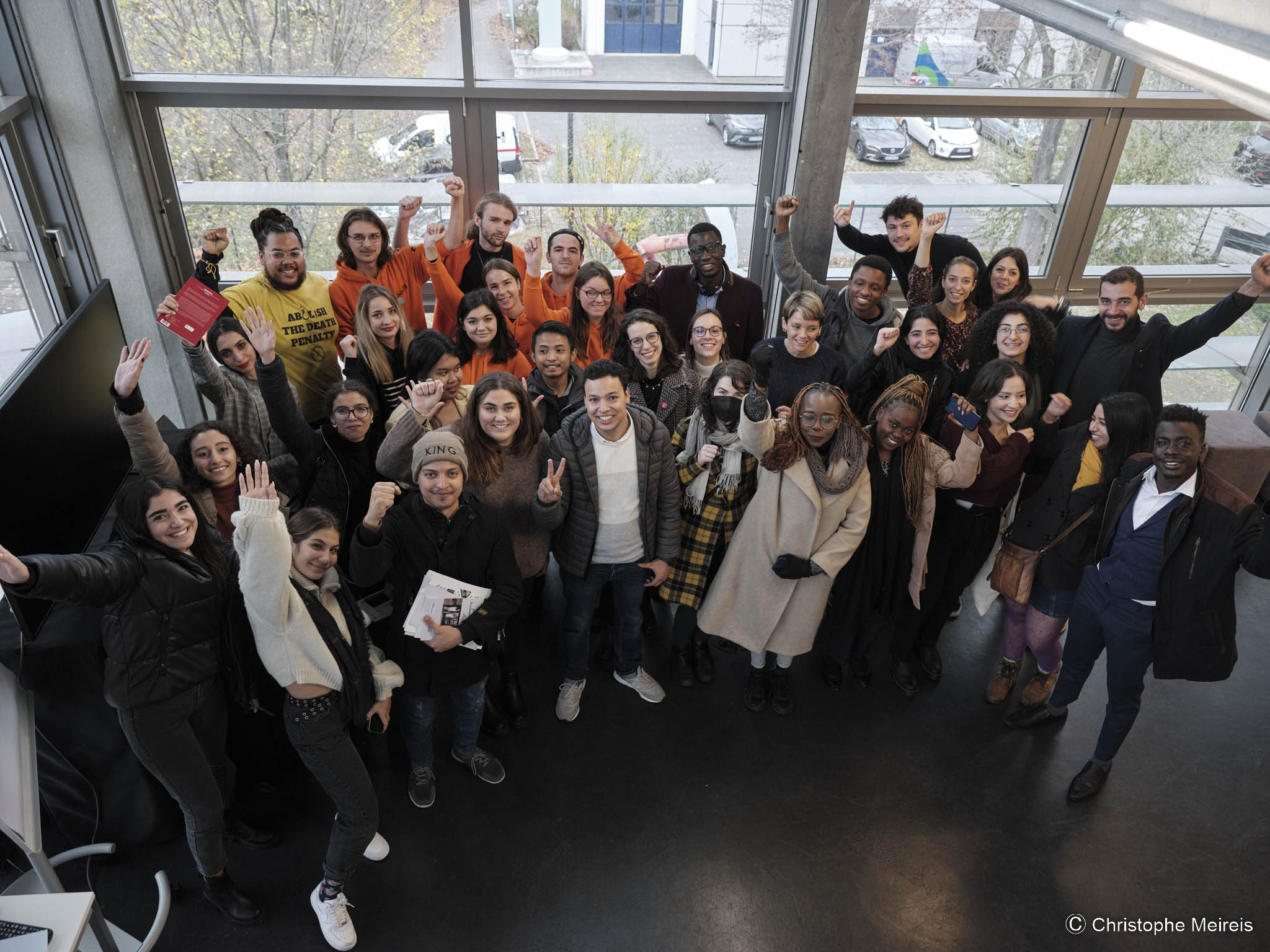
Margaux Richet, intercultural facilitator. Ⓒ Photo : Christophe Meireis

What was your thinking behind the Abolition Now Tour project?

I have always based my work on the following concepts:

  • Mutual transmission between generations: The workshops were intended to encourage an enriching dialogue between young people and those long involved in organisations fighting against the death penalty. The aim was to understand how far we have come in this area and to support each other.
  • Sustainability of the project: The aim of the workshops was to pass on methods that each member of each delegation could appropriate and re-use for their own projects or actions. Each participant was seen as a “multiplier” capable of amplifying the effects of these workshops. Great care was therefore taken to transmit “indirect” awareness-raising methods, based on creative techniques that also draw on local traditions, such as shadow theatre in Indonesia. These techniques have in common that they are visual, simple, require no specific or expensive equipment and are accessible to everyone, child or adult, literate or not. These “indirect” methods of talking about sensitive subjects such as the death penalty were also chosen to “protect” these young people, so as not to expose them directly.
  • International dimension of the project: Attention was paid to creating bridges between the workshops and to connecting the members of each delegation so that they developed an “international awareness” of their joint participation in this project. This also helped them not to feel isolated in their actions, to move forward collectively in different countries and to draw inspiration from each other.
Advocacy
December 2022
A year ago, ECPM launched an exceptional mobilisation of the world’s youth, aimed at raising…

How did you feel at the Congress when you were reunited with the delegations in Berlin?

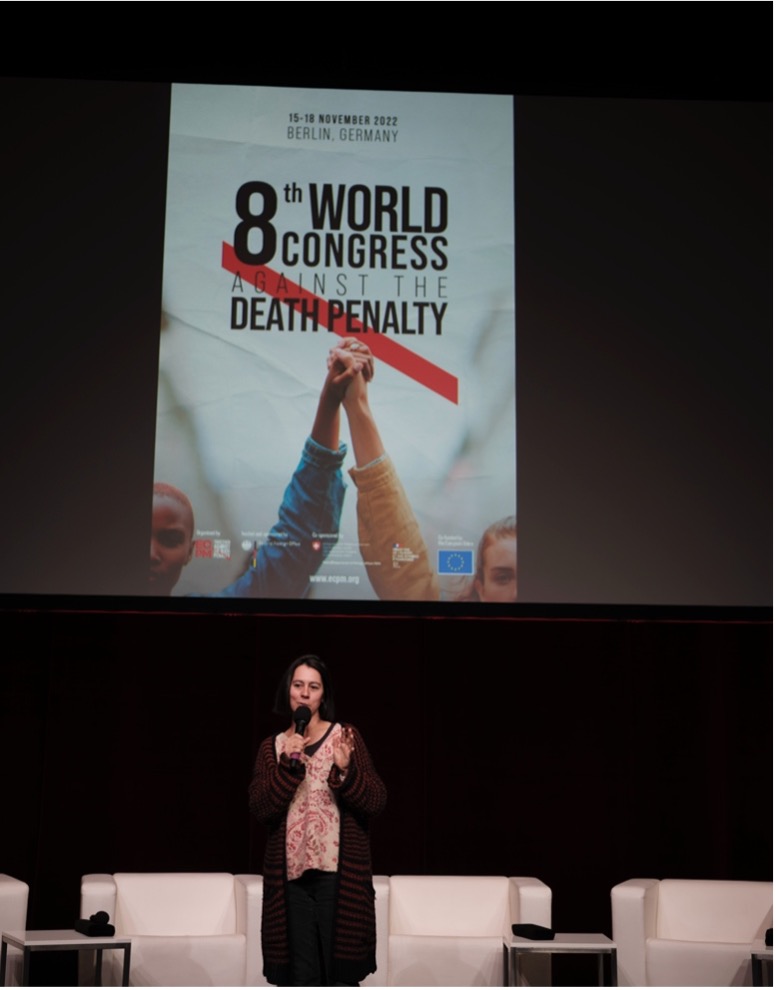
I was delighted to see most of the delegations present, but also very saddened and frustrated by the absence of some participants, in particular the DRC delegation, which was unable to obtain visas to take part in the Congress. It’s a difficult exercise to motivate a group of people who don’t know each other in two days to form a team and work together on a subject as complex and sensitive as the abolition of the death penalty, and even more so in a country where conflicts have been raging for many years. Participation in the Congress was one of the “promises” of the project and therefore a powerful driving force to encourage these groups to carry out advocacy work for abolition. Not being allowed to come to Berlin had a profound effect on young people in DRC. I worked during and after the Congress to restore their motivation and value their commitment, with the support of ECPM’s local partner.

That said, I was obviously very happy for the people attending the Congress. I was delighted to see them taking an active part in the programme at so many different levels, working with the Congress team to put the programme together, moderating the youth plenary session, enlivening certain moments with music or dance, or talking to the public about the results and progress of their actions.

How important do you think this type of project is for other human rights movements?

The sustainability of a human rights struggle depends on intergenerational transmission.

In many societies, the way older generations perceive youth or young adults is often marked by rather negative stereotypes regarding their concrete contribution to serious social or political issues. These stereotypes can take different forms but, generally speaking, the result is that the potential of these young people is underestimated. Many young people suffer from discrimination linked to their age or to a layering of different forms of discrimination, known as multiple or intersectional discrimination (age, gender, disability or other social or cultural criteria).

This “negative” perception reduces them to a rather passive role or, at best, to carrying out decisions taken by elders at all levels of society: their skills are not taken seriously, their energies or ideas are not valued, their voices are not listened to, they are not included or consulted when important decisions are taken, they are not trusted.

This type of project allows us to challenge these stereotypes, to question them and to open our eyes to the extraordinary resources that these young people possess. When these resources are valued, they never cease to amaze! Any organisation working for human dignity and respect for human rights can draw inspiration from this type of project, where it is young people who determine the course of exchanges, who express their wishes, needs and reservations. Their own life experience is valued and they are encouraged to have confidence in their knowledge and understanding of a subject and their environment in order to put forward their ideas and advance a cause. It’s in a setting where the collective intelligence of the group is promoted that ingenious and creative ideas can emerge.

“Peer to peer” effects should also be considered. Youth attracts youth! Young people bring their “analogue and virtual” networks with them. They can reach many more people at the same time. And, in the digital age, they have mastered the skills needed to navigate virtually, express themselves and transmit messages in multiple ways. They are formidable allies for NGOs.

What results do you think the Abolition Now Tour has had for the abolitionist community?

Locally, during the workshops, many people involved in the project’s various partner organisations and members of the abolitionist community (lawyers, former death row prisoners, etc.) said that they had renewed hope and were impressed by the creativity, intelligence, commitment and contagious energy of these young people. They breathed new life into the advocacy work of the organisations that hosted them. As one of the project coordinators told me: “They showed me that we can approach this issue in a more creative way”. It’s inspiring!

Internationally, at the Berlin Congress, the presence of delegations from Indonesia, the United States, Kenya, Lebanon and Morocco made the event very dynamic, in particular by influencing or illustrating the subjects dealt with in the various sessions, by contributing creatively at different levels, by sharing their experiences of the project, and by approaching the other participants.

At the same time, the Congress also had a powerful effect on these young people, motivating them to continue working beyond the project to bring about abolition of the death penalty. Most of the delegations are keen to continue their teamwork. Here are a few examples of the concrete results that have come out of the project and the Congress:

  • The Indonesian delegation wants to help increase the presence of the Asian abolitionist community at future congresses and continues to be actively involved in Indonesia.
  • In DRC, in March 2023, the young people produced a video in which they introduce themselves, express their motivation to take action for abolition and call on other young people in DRC to join them.
  • In the United States, the group organised an awareness-raising event in a bookshop. It plans to hold a conference to discuss how to create an event called “People’s Tribunal against Texas”. All the abolitionist organisations in Texas will be invited, as well as a range of speakers.