Death penalty as a tool of political repression
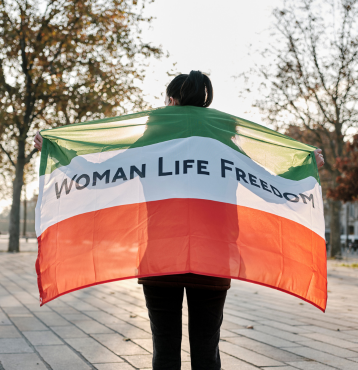
The report shows that the death penalty continues to be used as a central tool of political oppression and repression. Mahmood Amiry-Moghaddam, Director of Iran Human Rights, points out:
“By creating fear through an average of 4 to 5 executions per day in 2025, authorities tried to prevent new protests and prolong their crumbling rule. But by the end of the year, people took to the streets again to demand their fundamental rights, demonstrating the failure of the policy of the gallows.”
In 2025, Iranian authorities violated their international obligations by executing people for crimes that do not fall into the category of the most serious crimes under international law, and carried out public hangings. A large proportion of those executed came from the most marginalised sectors of society. Of particular concern is the extremely high number of drug-related executions in 2025.
Raphaël Chenuil-Hazan, Executive Director of ECPM, adds:
“The death penalty in Iran is used as a political tool of oppression and repression. In 2025 alone, at least 795 people were executed for drug-related offences, many sentenced by Revolutionary Courts after grossly unfair trials and without due process. Despite this unprecedented surge, the UN Office on Drugs and Crime (UNODC) failed to issue a strong reaction. Such largescale executions for drug offences may constitute crimes against humanity, and the UNODC must ensure that its cooperation does not contribute to these crimes and must do everything within its mandate to help prevent them.”
Alarming trends in 2025
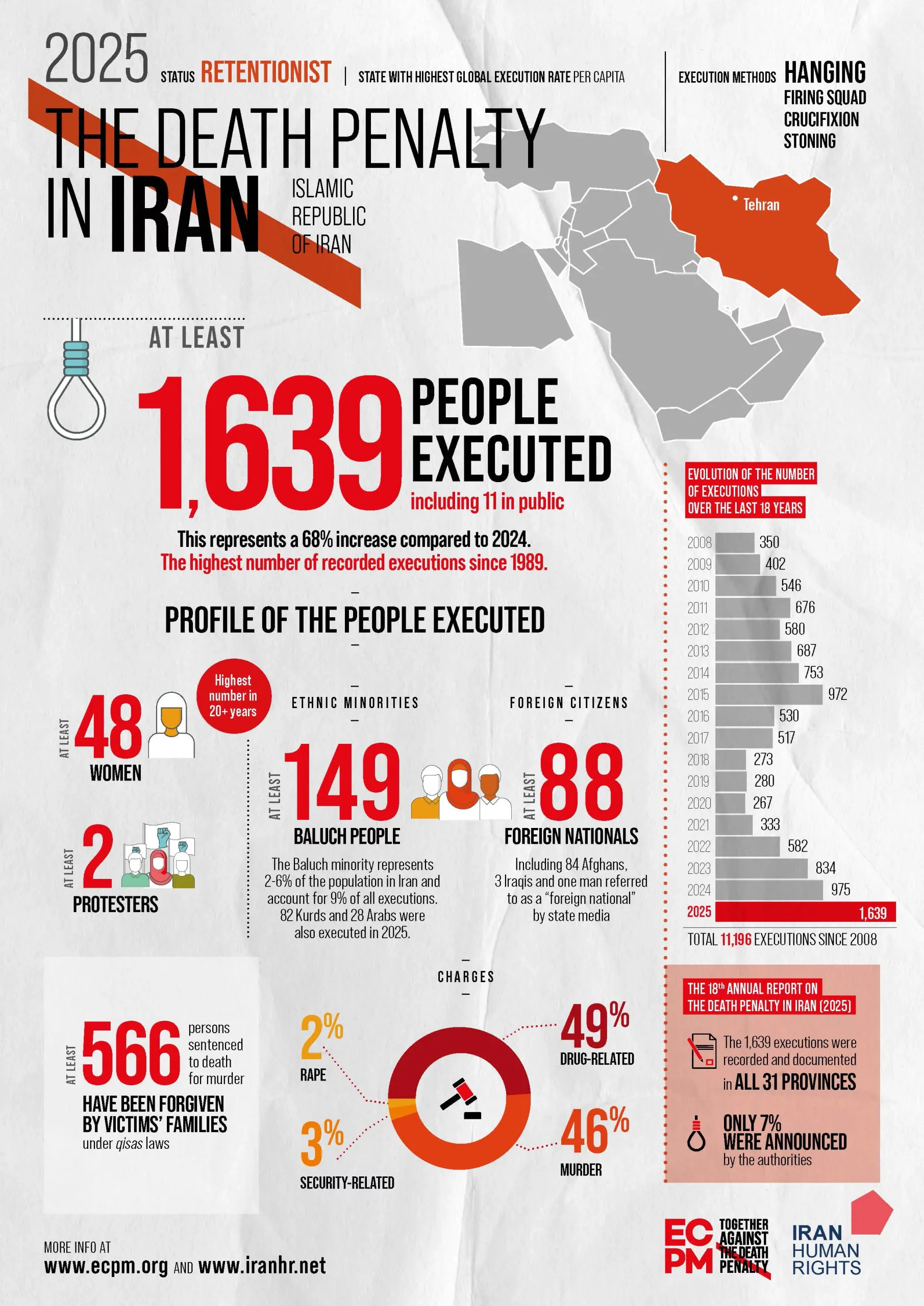
The report also highlights several alarming trends in the use of the death penalty in 2025. At least 48 women were executed, the highest number recorded in at least two decades, when women. The Islamic Republic also continued to target foreign nationals, executing at least 84 Afghan nationals, three Iraqi nationals and a man referred to only as a “foreign national.” In addition, 11 executions were carried out in public spaces, where children were amongst the spectators, a practice intended to spread fear and reinforce the state’s policy of intimidation.
UN concerns over possible crimes against humanity
In October 2025, the UN Fact-Finding Mission expressed alarm at the extraordinary spike in executions. Fact-Finding Mission expert Max du Plessis stated:
“If executions form part of a widespread and systemic attack against a civilian population, as a matter of policy, then those responsible – including the judges who impose capital punishment – may be held accountable for crimes against humanity.”
A prominent Iranian human rights lawyer accepted the invitation to write the foreword of the report.
Early 2026: a worsening crisis
This report is published at a time when the Iranian people were subjected to the largest mass killing of protesters in the Islamic Republic’s history in January 2026. At the time of writing, they are also living under the fear and anxiety of daily bombardments amid an ongoing war.
In 2025, the Law on Intensifying the Punishment for Espionage and Cooperation with the Zionist Regime and Hostile States against National Security and Interests was adopted and entered into force in October 2025.
In March 2026, authorities began carrying out the executions of January 2026 protesters following grossly unfair trials, based on confessions obtained under torture. Hundreds of detained protesters remain at risk of death sentences and execution, including on the basis of this Law.
Resistance to the death penalty continues
Despite the extraordinary rise in executions, opposition to the death penalty inside Iran continues to grow. The “No Death Penalty Tuesdays” abolitionist movement behind bars has entered its third year, spreading to 56 prisons nationwide.
Iran Human Rights and ECPM call on the international community, including the United Nations, governments with diplomatic relations with Iran, and international organisations, to place the abolition of the death penalty at the centre of their engagement with Iran.
Key figures from the report
- At least 1,639 people were executed in 2025, including 11 in public spaces.
- Only 113 executions (under 7%) were officially announced, compared to 9.7% in 2024.
- 795 people (48.5%) executed for drug-related offences, a 58% increase from 2024 (503). Only 3 (0.18%) were announced by official sources.
- 747 sentenced to qisas (retribution-in-kind) for murder, a 79% increase from 2024 (419).
- 37 executions for rape charges.
- At least 57 executions for security-related charges: baghy (armed rebellion), efsad-fil-arz (corruption on earth) and moharebeh (enmity against God). Among them: 2 protesters, 18 political prisoners, 13 espionage defendants and 1 person convicted of financial corruption.
- Charges unknown for 3 executed individuals.
- At least 48 women executed, the highest number recorded in more than 20 years and a 55% increase compared to 2024 (31).
- At least 84 Afghan nationals were executed in 2025, compared to 80 in 2024, 25 in 2023 and 16 in 2022.
- 852 executions (52%) were based on death sentences issued by Revolutionary Courts, with more than 5,972 executions since 2010.
- At least 566 prisoners sentenced to qisas for murder charges were forgiven by the families of the murder victims in accordance with qisas laws.
- 553 executions reported to IHRNGO were not included in the 2025 figures due to lack of sufficient documentation or confirmation by two independent sources.
Press contacts
IHRNGO
Mozhgun Shirvan
mail@iranhr.net
+358 50 5505441
ECPM
Laura Crépin
lcrepin@ecpm.org
+33 6 01 78 50 15
About IHRNGO (Iran Human Rights)
Founded in 2005 and based in Oslo, IHRNGO is a non-profit, politically independent organisation working to abolish the death penalty in Iran as a step towards its universal abolition. Through an extensive network of activists, lawyers, families of death-row prisoners, and sources inside prisons, the organisation provides credible and widely cited reporting on executions and human rights violations across the country. Its work combines monitoring and documentation, international advocacy, support for human rights defenders, and efforts to promote due process and legal reform, contributing to increased awareness and efforts to limit the use of the death penalty in Iran.
To learn more