Gender and death penalty: lives marked by inequality
Women remain vastly underrepresented in politics: according to UN Women, they are a minority in the executive, legislative, and judicial branches. This situation directly influences the way laws, particularly those relating to the death penalty, are drafted and enforced, with particular consequences for women.
Differences in treatment based on gender can be observed in legislation and in practice: in Iran, a woman’s testimony is worth half that of a man’s. In many countries, sexual and domestic violence are not punished. In Iraq, “honor killings” are considered mitigating circumstances.
The report of the United Nations Secretary-General on the application of the death penalty, published in August 2025, emphasizes:
Despite the link between gender-based violence and death sentences imposed on women, many legal systems do not take gender-related circumstances and mitigating circumstances into account in capital cases involving women.”
Criminal proceedings related to the death penalty rarely take into account differences in treatment based on gender, which complicates the collection of reliable data. As a result, the mistreatment suffered by women sentenced to death or at risk of being sentenced to death cannot be properly identified and quantified. However, there are particularly significant examples of such inequalities around the world. In Singapore, in July 2023, a woman was executed for a drug-related offense, while the man co-accused for the same offenses
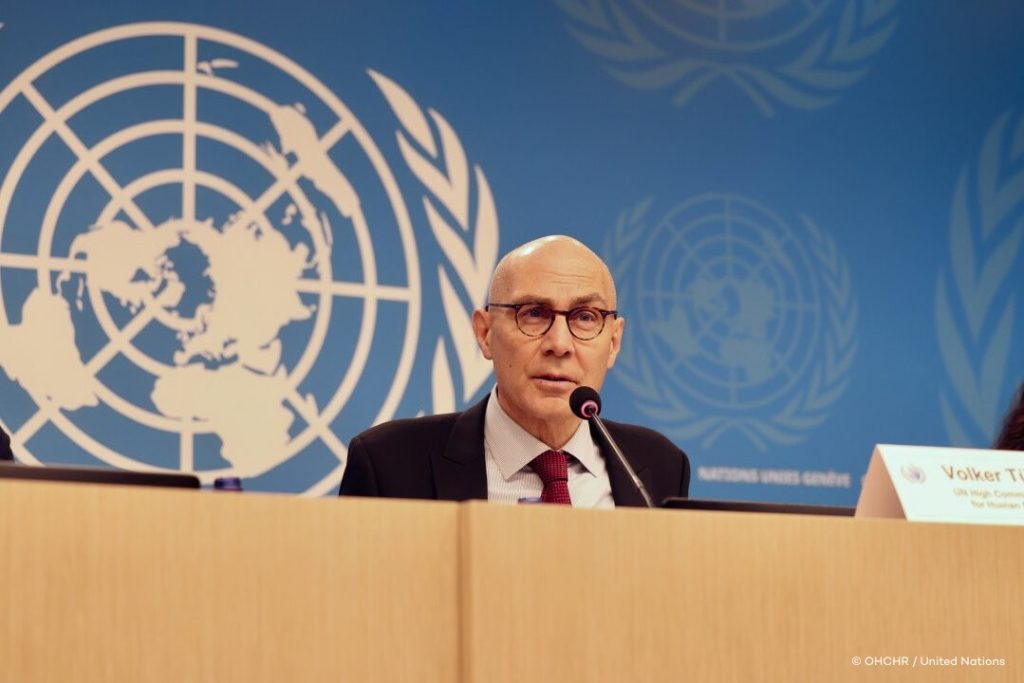
In February 2025, during the Biennial High-Level Segment on the Death Penalty, Mr. Volker Türk, United Nations High Commissioner for Human Rights, expressed concern about the gender dimension of the death penalty before the United Nations Human Rights Council:
“There is ample evidence that States do not fully take into account gender-related mitigating circumstances when sentencing women to death, including a history of gender-based trauma and violence.”
Although the number of women sentenced to death worldwide is lower than that of men—they represent less than 5% of those sentenced to death—recent trends remain worrying. The year 2025 was marked by a frightening increase in executions in certain countries, particularly those of women.
Although they do not constitute the majority of those sentenced to death, they are often indirectly affected by the use of the death penalty as relatives of men sentenced to death, whether they are mothers, wives, or daughters.
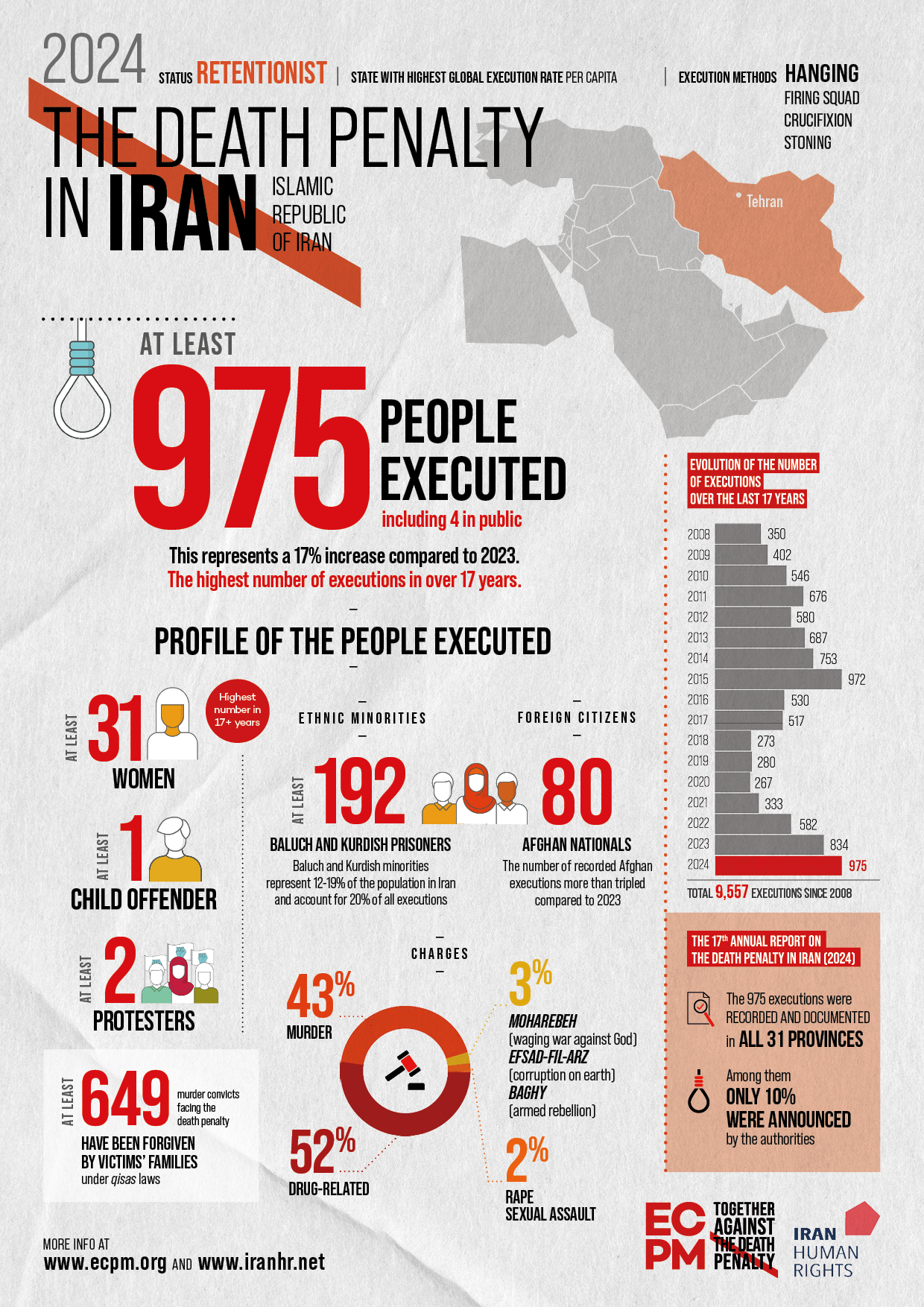
It is entirely possible to make a numerical projection if we consider that at least two women are affected by each execution. Thus, in 2025, in Iran alone (at least 1,500 executions of men) and Saudi Arabia (356 executions of men), 3,712 women close to those sentenced to death would have been affected.
The specific difficulties faced by women close to those sentenced to death, whether in states that observe a moratorium or in retentionist states, are very poorly documented.
From indictment to conviction: multiple forms of discrimination
Women face intersecting forms of discrimination and do not enjoy equal access to justice. In many countries, the majority of judges and lawyers are still men.
The vast majority of women sentenced to death are convicted of crimes committed in response to gender-based violence they may have suffered, including aggravated domestic violence.
In 2017, the UN Special Rapporteur on extrajudicial, summary, or arbitrary executions stated in a report to the Human Rights Council:
Holders of the mandate on extrajudicial, summary or arbitrary executions have long argued that the imposition of the death penalty amounts to an arbitrary killing in cases where the courts have ignored essential facts of a capital defendant’s case. This should logically include a long history of domestic violence, including because of larger social patterns of gender inequality. Women facing capital prosecution arising out of domestic abuse suffer from gender-based oppression on multiple levels. For instance, it is exceedingly rare for domestic abuse to be treated as a mitigating factor during capital sentencing proceedings. Even in those countries with discretionary capital sentencing, courts often ignore or discount the significance of gender-based violence.
It has been observed in many women’s legal proceedings that their mitigating circumstances are given less consideration. Indeed, there is a gender bias that women are incapable of acts of violence. In fact, if they commit such acts, they are seen as having transgressed their condition and the values associated with femininity. They are then more easily viewed as cold-blooded criminals. This is a simplistic, biased, and discriminatory line of reasoning that violates their right to a fair trial. As a result, although their representation on death row remains relatively low, women accused of capital offenses are judged more harshly and are therefore more likely to be sentenced to death.
Countries that severely criminalize drug trafficking, such as those in the Gulf and Southeast Asia, have a high proportion of women on death row. Often living in economic precarity, women are more likely to be involved at the lowest, most exposed levels of the drug trade and are thus most vulnerable to arrest for related offences that carry the death penalty.
After sentencing, particularly discriminatory conditions of detention for women
The death row experience is regularly described as torture by international human rights organizations, due to the harsh conditions of detention, the length of incarceration, and the anxiety associated with awaiting execution.
Women on death row are likely to suffer additional violations of their fundamental rights, as their gender-specific needs are rarely taken into account for a variety of reasons. Places of incarceration do not always protect them from sexual and gender-based violence and/or necessarily guarantee access to gender-specific hygiene and health care. Women are more likely than men to be exposed to sexual violence in detention when they are not separated from male prisoners and when they are guarded by male prison staff. They are also exposed to different consequences in the event of sexual violence, such as becoming pregnant.
It is imperative to highlight the reality of the issues surrounding the application of the death penalty for women and to fight for intersectional justice, considering the multiple factors of discrimination they face.
Combating sexual violence and the death penalty
The issue of using the death penalty as a tool to combat impunity in cases of sexual violence against women is a challenge that lies at the intersection of the abolitionist movement and women’s rights.
Voices are regularly raised advocating the application of the death penalty as a punitive solution to cases of violence against women and girls. For example, at the end of 2025, in Kyrgystan, attempts have been made to reintroduce the death penalty for certain crimes against women and children. The amendments proposed in the bill were rejected by the Constitutional Court in December 2025. Currently, more than a dozen states still impose the death penalty for rape, even though this does not address the root causes of sexual and gender-based violence, rape culture, or the barriers to victims’ effective access to justice.
Women committed to the abolition of the death penalty
Whether they are ministers, parliamentarians, representatives of national human rights bodies, judges, lawyers, or human rights defenders, women face additional obstacles in their commitment to abolishing the death penalty. They are sometimes the target of insulting messages on social media, but in some countries they may also be arrested and exposed to various forms of gender-based violence.
For more information