ECPM reviews the current events and reports on the serious risks of escalation in the use of the death penalty by the authorities, which has been used for several decades as a tool of oppression and political repression.
Protests evolving into calls for an end to the regime
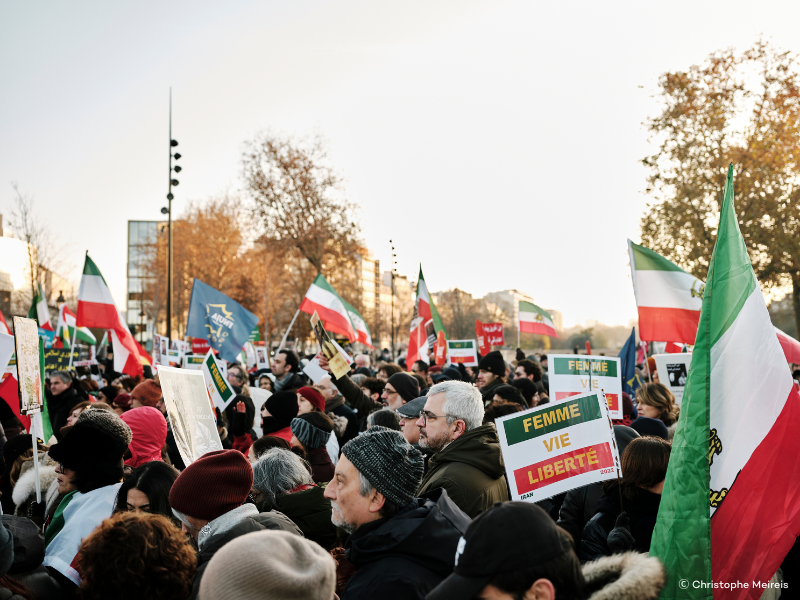
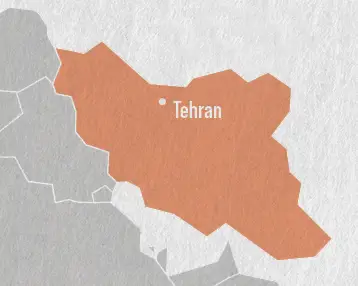
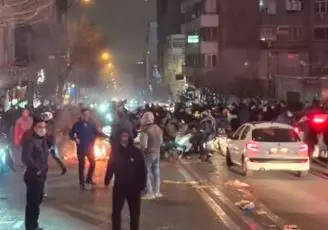
An economic crisis, rampant inflation and catastrophic management of essential state services have taken a heavy toll on the Iranian population in 2025. On 28 December, following a collapse in the value of the currency, traders in Tehran’s Grand Bazaar closed their shops and went on strike.
Screenshot from Iran Human Rights’ Instagram
This mobilisation quickly evolved. Its geographical scope widened; while it had initially begun in Tehran, it gradually spread throughout the state. The profile of those involved in the mobilisation changed; while the first participants in this new mobilisation were merchants, they were later joined by all types of citizens. Finally, the range of demands grew. While initially mainly economic, they quickly evolved into calls for an end to the Islamic Republic of Iran, systemic change and respect for human rights, echoing some of the slogans of the “women, life, freedom” movement. The protests are still ongoing in January 2026, as is the repression.
Unprecedented repression of demonstrations
From the outset of the protests against the regime, the Iranian authorities attempted to put an end to them by force without attempting to respond to the initial demands concerning the cost of living. In this context, multiple severe and serious violations of international human rights law were committed by the Iranian authorities, including “Revolutionary Guards”: use of lethal weapons against unarmed protesters, mass arrests, inhuman and degrading treatment, use of forced confessions and broadcast on national media, including of minors (at least 40 videos of forced confessions are reported to have been broadcast on national media), and cutting off means of communication, including the internet.
The increasing difficulties of documentation
Even before the internet was cut off, it was already difficult to document the extent of human rights violations.
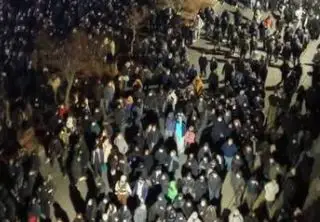
Since the protests began in December 2025, the human toll has been increasing day by day and could be much higher than the figures currently being reported. As of 14 January 2026, NGOs including Iran Human Rights (IHRNGO), a partner of ECPM, are already reporting more than 3,400 deaths, thousands of injuries and as many arrests. Due to the difficulties in documenting the number of deaths and arrests, and the difficulties in communicating both inside and outside the state, it is likely that the information received so far is only partial and does not provide a complete picture of the human rights violations committed throughout Iran. Historically, however, repression has always been more violent outside Tehran.
Screenshot from Iran Human Rights’ Instagram
The risks of an escalation in the use of the death penalty
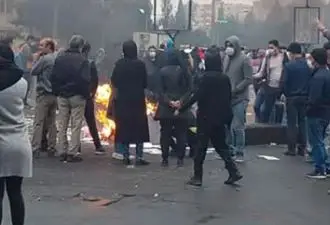
In early January 2026, the authorities began to toughen their stance and crack down on demonstrators when the slogans no longer focused solely on demands against the high cost of living but also on regime change. The vocabulary used by the Iranian authorities then evolved to refer to the demonstrators as enemies of the state, thereby seeking to legitimise increasingly violent repression and to broaden the scope and severity of legal proceedings aimed at silencing all forms of protest.
On 3 January 2026, Ayatollah Ali Khamenei spoke out to distinguish between protesters and rioters, whom he described as agents of foreign powers. On 5 January 2026, the Head of the Judiciary, Gholamhossein Mohseni Ejei, announced a “merciless” response against those he called foreign agents.
I order the Attorney General and prosecutors throughout the state to act in accordance with the law and with determination against rioters and those who support them…. and to show no mercy or leniency.
Ayatollah Ali Khamenei
On 7 January 2026, the Ministry of the Interior justified the digital blackout (Internet at 1% of its capacity) on grounds of “national security” against terrorism. On 9 January 2026, Khamenei delivered a speech on television that is considered a turning point. He declared that “the government will not back down”, accused the United States and Israel of financing a “hybrid war” and called for severe repression. On 10 January 2026, the Tehran Prosecutor General declares that all arrested protesters will be charged with “Moharebeh” (enmity towards God), a crime punishable by death, contrary to international human rights law. On 14 January, the head of the judiciary declared that the Iranian authorities have announced that the demonstrators will be tried quickly and executed.
The administration of justice in Iran and the grounds for death sentences
In Iran, the administration of justice is completely contrary to all minimum standards of fair trial: from arrest to execution of the court decision, individuals are subjected to ill-treatment, torture, lack of legal representation and the application of legislative provisions that contravene international law. Death sentences are mainly handed down by the Revolutionary Courts, created in 1979 on the orders of Ayatollah Khomeini, without any constitutional basis. These courts are not transparent and their judges are known to abuse their judicial powers more than any others. A number of Iranian laws provide for the death penalty for offences that are not violent crimes and are therefore contrary to international law, such as: Moharebeh (enmity towards God), Efsad-Fil-Arz (corruption on earth) or Baghy (armed rebellion). Executions following death sentences handed down in such trials may be considered arbitrary executions under international law.
Historically, in the context of the repression of previous demonstrations, only a small number of demonstrators were on death row and executed. However, the intensification of oppression, repression and the use of the death penalty to instil terror in the population has also led to an increase in the number of drug-related executions. International law strictly prohibits the use of the death penalty for offences that are not violent crimes.
Since 2023, Iran has seen a dramatic increase in the use of the death penalty. In 2024, more than 950 executions were recorded. In 2025, Iran recorded the highest number of executions in its recent history, exceeding the terrifying threshold of 1,500 executions. Currently, hundreds of death row prisoners are believed to be held in Iranian prisons.
In this general context, the risk of mass executions is considered “imminent” by some NGOs, which fear that the regime will use economic chaos or international tensions to carry out these hangings away from foreign eyes.
Screenshot from Iran Human Rights’ Instagram
Reactions from the international community
Many diplomatic missions have condemned the multiple human rights violations committed. Some diplomatic missions have also summoned Iranian ambassadors, reduced their diplomatic presence and, in some cases, been summoned or had their presence in Iran reduced at the request of the Iranian authorities.
Senior representatives of United Nations bodies have also stepped up their reactions, condemning the violent repression of demonstrations and violations of international law.
However, the international community must go beyond these condemnations and identify concrete ways to act to ensure that international law is respected.
For further information
Reactions from senior representatives of United Nations bodies on the crackdown on protests in December 2025-January 2026
– 9 January 2026, Volker Türk, United Nations High Commissioner for Human Rights
– 10 January 2026, International Fact-Finding Mission to Iran (FFMI)
– 11 January 2026, Edouard Beigbeder, UNICEF Regional Director for North Africa and the Middle East
– 11 January 2026, António Guterres, UN Secretary-General – Iran: the UN chief
– 13 January 2026, Volker Turk, United Nations High Commissioner for Human Rights
– 13 January 2026, joint statement by the Special Rapporteur on human rights violations in the Islamic Republic of Iran, the Special Rapporteur on freedom of opinion and expression, the Special Rapporteur on extrajudicial, summary or arbitrary executions, the Special Rapporteur on the rights to freedom of peaceful assembly and freedom of association, and with the approval of the Special Rapporteur on Afghanistan